
By Republic Dispatch Staff
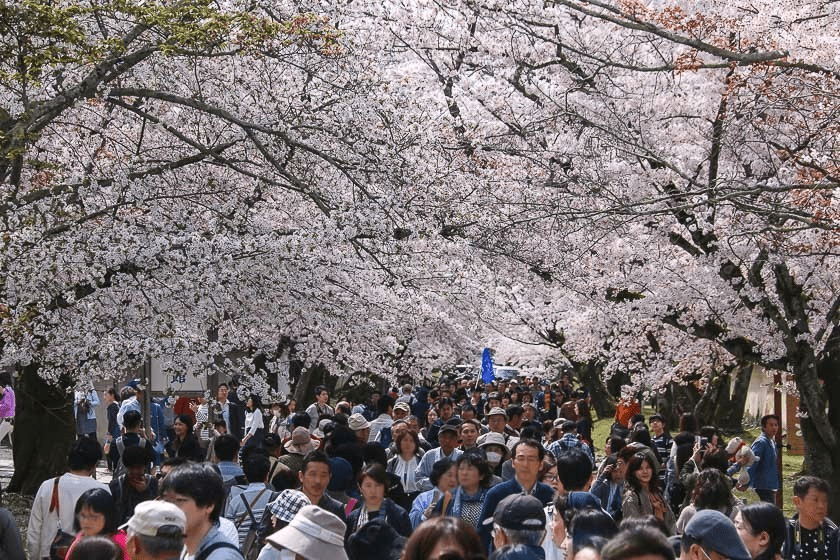
Japan’s decision to cancel or sharply curtail parts of its famed cherry blossom festival season amid overwhelming tourist crowds isn’t just a local disappointment—it’s a global cautionary tale. According to reporting by The Guardian, authorities pulled back events after popular viewing areas were flooded with visitors, straining public safety, transit, and local communities during what is traditionally a calm, reflective cultural season.
For a country that has spent the last decade carefully reopening to the world—especially after pandemic-era shutdowns—the move underscores a hard truth: tourism growth without guardrails eventually eats the very thing people came to see.
Cherry blossom season, or hanami, is not a theme park attraction. It is a fleeting, deeply rooted cultural moment—one that values respect, order, and shared public space. When that balance is lost, cancellation becomes the last responsible option.
When “Welcome Back” Turns Into Overload
Japan has experienced a surge in inbound tourism since border restrictions eased, fueled by a weak yen, aggressive airline expansion, and social-media-driven travel trends. The result? Historic crowd levels in cities like Kyoto, where narrow streets, residential neighborhoods, and ancient temples were never designed for mass tourism at scale.
Local officials cited safety risks, overwhelmed infrastructure, and mounting frustration from residents—many of whom saw their daily lives disrupted for weeks. Trains packed beyond capacity. Emergency access routes blocked. Public spaces trashed. This isn’t hospitality failure; it’s capacity reality.
Canceling festival elements wasn’t anti-tourist. It was pro-community.
A Lesson Many Western Cities Ignore
There’s a tendency—especially in Western governments—to treat tourism as an unqualified good. More visitors equals more money. More money equals success. Japan’s response breaks from that reflex.
Rather than pushing ahead for the sake of hotel occupancy and Instagram optics, officials chose preservation over profit. That’s a lesson many cities struggling with overtourism—from Barcelona to Venice to U.S. national parks—have been slow to learn.
Cultural heritage isn’t infinite. Neither is public patience.
Order, Limits, and Cultural Respect Still Matter
Japan’s move also highlights a cultural expectation that visitors adapt to local norms—not the other way around. When crowd behavior began to undermine safety and respect, authorities enforced limits. That approach may frustrate some travelers, but it preserves the long-term integrity of the experience.
There’s a broader point here for policymakers: borders reopening doesn’t mean boundaries disappearing. Sustainable tourism requires enforcement, planning, and sometimes saying “not this year.”
The Takeaway
Japan didn’t cancel cherry blossoms. Nature will do what it always does. What officials canceled was chaos—and in doing so, they defended community standards, public safety, and cultural dignity.
In an era where everything is marketed, monetized, and maxed out, Japan’s decision is a reminder that restraint isn’t weakness. It’s governance.
And sometimes, the most responsible choice is knowing when enough is enough.
 Republic Dispatch
Can’t say I blame them.
LikeLiked by 1 person