By Republic Dispatch Staff
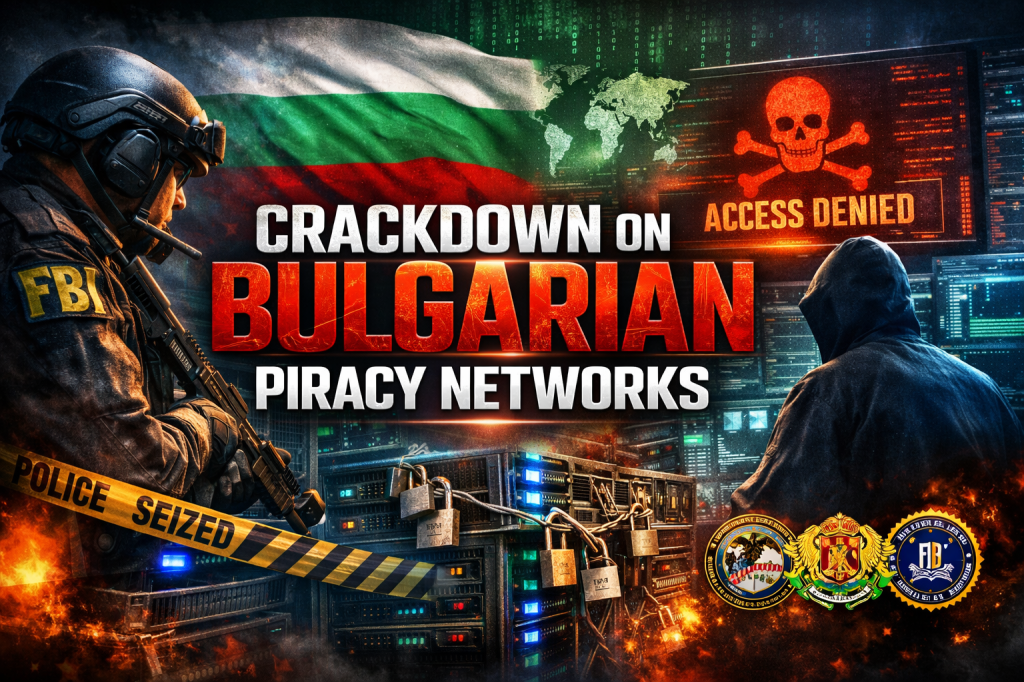
In a rare but decisive win for international rule-of-law cooperation, U.S. law enforcement has assisted Bulgarian authorities in dismantling what officials describe as the three largest online piracy platforms operating out of Bulgaria—a major blow to global digital theft networks that have long evaded accountability.
According to the U.S. Department of Justice, American agencies worked closely with Bulgarian law enforcement to identify, disrupt, and ultimately shut down the illegal streaming and piracy sites, which collectively attracted millions of users worldwide and generated substantial illicit revenue. The sites distributed pirated movies, television shows, and other copyrighted material on a massive scale, undermining legitimate markets and intellectual property protections.
A Coordinated International Strike
The operation underscores a growing willingness among Western governments to treat large-scale digital piracy not as a victimless nuisance, but as organized crime with transnational reach. U.S. officials emphasized that the takedown relied on intelligence sharing, technical assistance, and coordinated legal action—hallmarks of increasingly assertive cyber enforcement strategy.
“This wasn’t about one country acting alone,” the Justice Department noted. “It was about partnership—bringing together resources and expertise to dismantle sophisticated criminal enterprises that operate across borders.”
Bulgarian authorities executed the local enforcement actions, including server seizures and site shutdowns, while U.S. agencies provided investigative and technical support. The result was the permanent disruption of platforms that had become pillars of the global piracy ecosystem.
Why This Matters
For years, online piracy networks have exploited jurisdictional gaps, lax enforcement, and political hesitation. Sites often relocate servers, change domains, or hide behind layers of intermediaries, betting that governments will lack the coordination—or resolve—to shut them down.
This operation sends a different message: large-scale piracy operations are no longer untouchable, even when they operate outside U.S. borders.
From a center-right perspective, the case reinforces several key principles:
- Rule of law applies online — digital crime is real crime, and enforcement must keep pace with technology.
- International cooperation works — when allies coordinate, even entrenched criminal networks can be dismantled.
- Intellectual property matters — piracy undercuts creators, businesses, and lawful markets, while often funding broader criminal activity.
A Broader Signal to Cybercriminals
The takedown also aligns with a broader shift in U.S. policy toward more aggressive cyber enforcement abroad, particularly when foreign-based operations harm American businesses and consumers. Rather than relying solely on civil lawsuits or domain blocking, authorities are increasingly pursuing criminal disruption strategies.
For piracy operators—and other digital criminals—the message is unmistakable: geography is no longer a shield.
As online crime grows more sophisticated, this joint U.S.–Bulgarian operation offers a model for how democratic governments can assert control, defend lawful commerce, and restore accountability in the digital domain.
 Republic Dispatch