By Republic Dispatch Staff
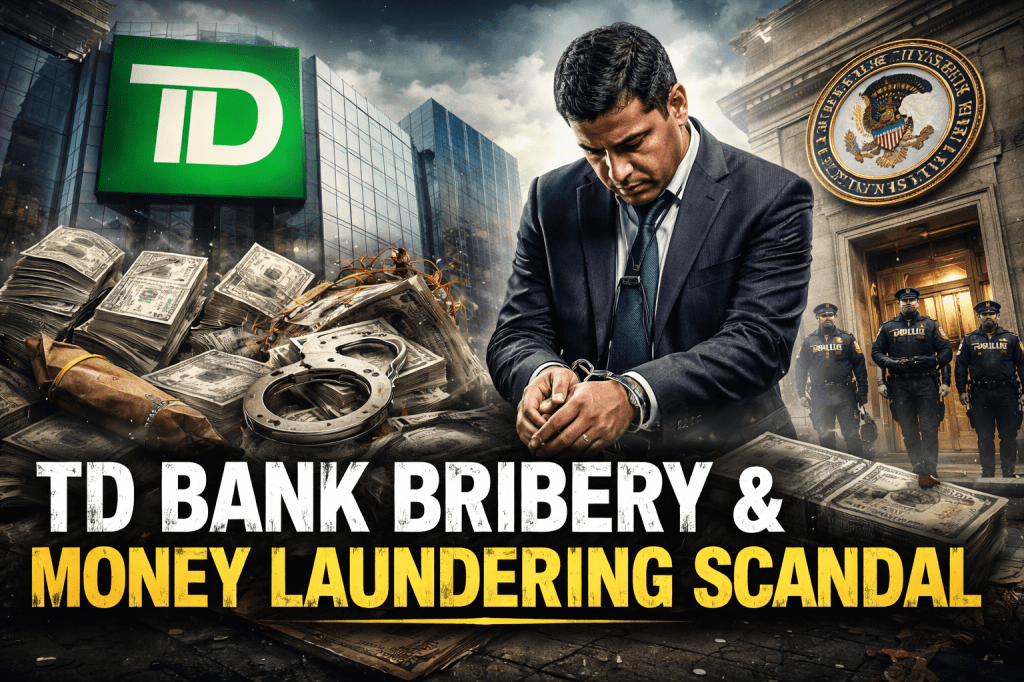
A former employee of TD Bank has pleaded guilty in federal court to accepting bribes and laundering more than $55 million tied to illicit activity connected to Colombia—an indictment that underscores persistent vulnerabilities inside major financial institutions and the national security risks posed by transnational money laundering.
According to the U.S. Department of Justice, the defendant abused his position inside TD Bank to facilitate the movement of massive sums of dirty money through the U.S. financial system, knowingly bypassing internal safeguards in exchange for personal kickbacks.
How the Scheme Worked
Federal prosecutors say the former bank employee leveraged his insider access to process and approve suspicious transactions that should have triggered enhanced scrutiny. Instead of flagging the activity, he allegedly:
- Accepted bribes to move large sums through TD Bank accounts
- Helped disguise the origins of funds tied to Colombian criminal networks
- Enabled transactions designed to evade anti–money laundering (AML) controls
The result: tens of millions of dollars flowing through the U.S. banking system with minimal resistance—money that prosecutors say was connected to criminal activity abroad.
A Broader Warning for the Banking System
While the case centers on one individual, the implications are far wider. Large financial institutions are entrusted with enforcing AML and Know Your Customer (KYC) rules precisely to prevent this type of abuse. When insiders are compromised, those protections can collapse.
From a center-right perspective, this case highlights a recurring problem: regulatory frameworks are only as strong as the people enforcing them. Massive compliance departments and paperwork-heavy regimes mean little if internal accountability fails or if incentives reward volume over vigilance.
National Security and Organized Crime Risks
Money laundering tied to Colombia is not merely a financial crime—it is a national security concern. Criminal proceeds fuel drug trafficking, organized crime, and destabilizing activity throughout the Western Hemisphere. When U.S. banks become conduits, even unknowingly, the consequences extend far beyond balance sheets.
The Justice Department emphasized that insider corruption within financial institutions remains a top enforcement priority, particularly when it facilitates international criminal enterprises.
Accountability Still Matters
The guilty plea represents a clear message: insiders who sell out their institutions and the public trust will face serious consequences. But it also raises uncomfortable questions for regulators and bank executives alike.
Were red flags missed?
Were internal controls overridden too easily?
And how many similar schemes go undetected?
As federal authorities continue pressing banks to tighten AML enforcement, cases like this suggest the real challenge is not writing more rules—but ensuring existing ones are actually followed.
Republic Dispatch will continue tracking major financial crime cases that reveal how global corruption intersects with U.S. institutions—and why enforcement, accountability, and integrity still matter in an increasingly complex financial world.
 Republic Dispatch