By Republic Dispatch Staff
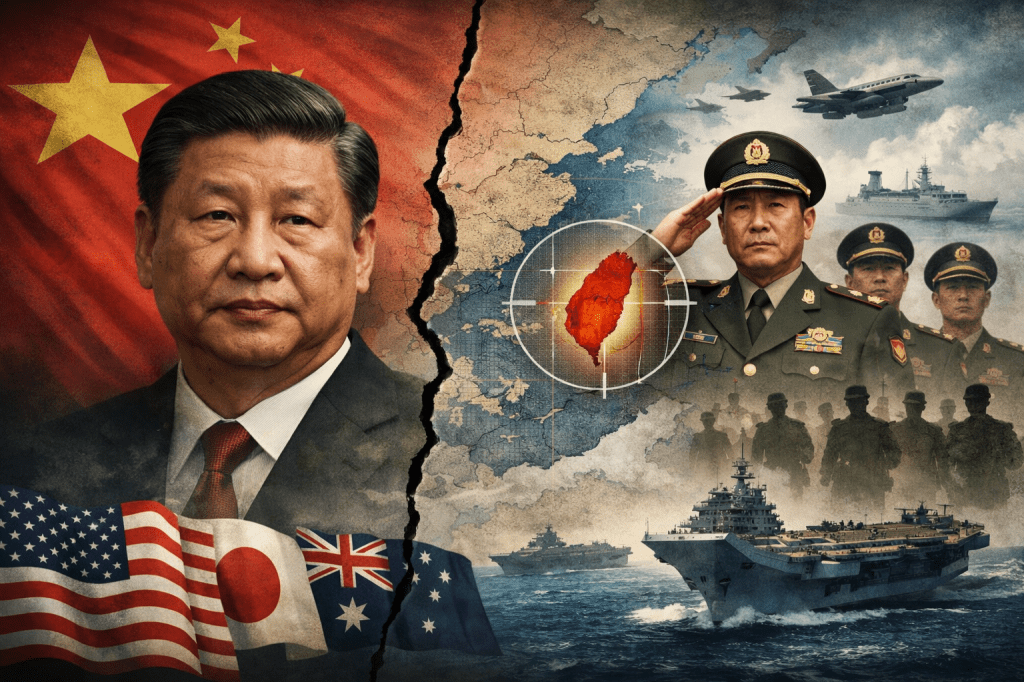
China’s ruling Communist Party has long insisted on “the party’s absolute leadership” over the People’s Liberation Army (PLA). Yet a Financial Times report reveals that PLA channels have now publicly accused one of Beijing’s most senior generals of actions that “undermined Xi Jinping’s authority.” This is not just factional infighting — it is a crack in the façade of monolithic control that demands serious attention from Western policymakers.
For decades, Xi has consolidated power with an intensity unseen since Mao Zedong. He abolished term limits, eclipsed rivals, and reshaped the PLA command structure to ensure personal loyalty. On paper, this centralization should have reinforced unity. In reality, the public nature of this accusation suggests dissatisfaction among professional soldiers and cadres who see strategic missteps or dangerous political overreach.
Why This Matters Beyond Beijing
From a center-right vantage point, the significance of this development is twofold: strategic stability and global posture.
First, internal dissent at the top echelons of the PLA risks miscalculation. A military that is not aligned with the leader it is meant to serve may pursue tactical initiatives that contradict China’s declared strategic goals. Washington and its allies must prepare for a strategic environment where Beijing’s signals are less predictable — not more so.
Second, this public reprimand weakens Xi’s carefully engineered aura of invincibility. In authoritarian systems, perceived strength is policy. If Xi’s grip can be challenged — even within controlled channels — it suggests potential fragmentation under stress, whether over Taiwan, in the South China Sea, or in cyber-security tensions. Democracies should neither cheer instability in Beijing nor ignore the potential it creates for misjudgment or crisis escalation.
Reassessing U.S. Policy and Alliance Posture
For the United States and its partners, three practical implications emerge:
1. Intelligence and Alliance Coordination Must Increase. A PLA showing cracks at the top demands enhanced intelligence sharing among allies. One centralized narrative of Chinese strategic intent is less reliable if competing factions exert influence.
2. Deterrence Must Be Credible but Calibrated. Beijing’s internal debates do not imply weakness. A PLA unhappy with Xi’s leadership might still respond aggressively to external pressure if it believes doing so restores prestige or unity. Deterrence, therefore, should be firm but avoid escalation traps.
3. Support for Taiwan and Regional Partners Is Imperative. If China’s leadership is undergoing internal strife, adversaries — from North Korea to Iran — may test limits. Strengthening alliances in the Indo-Pacific helps stabilize the region and sends a clear signal: weakness in Beijing does not translate to advantage through coercion.
Conclusions: A Moment to Watch, Not a Moment to Ignore
Western policymakers have too often treated Chinese internal politics as inscrutable or irrelevant to strategic planning. This public airing of military dissent strips away some of that opacity. Rather than assuming a monolithic, impenetrable Chinese command, democracies should adjust their analysis to acknowledge the possibility of competing strategic visions within the Communist Party and the PLA.
Xi Jinping still commands enormous authority. But when the military — historically the backbone of any Chinese ruler’s power — is implicated in disputes over his leadership, the reverberations reach far beyond Beijing. For democracies committed to peace through strength and clarity of purpose, this moment should be a call to sharpen strategic assessments, reinforce alliances, and balance deterrence with prudent diplomacy.
 Republic Dispatch