
By Republic Dispatch Staff
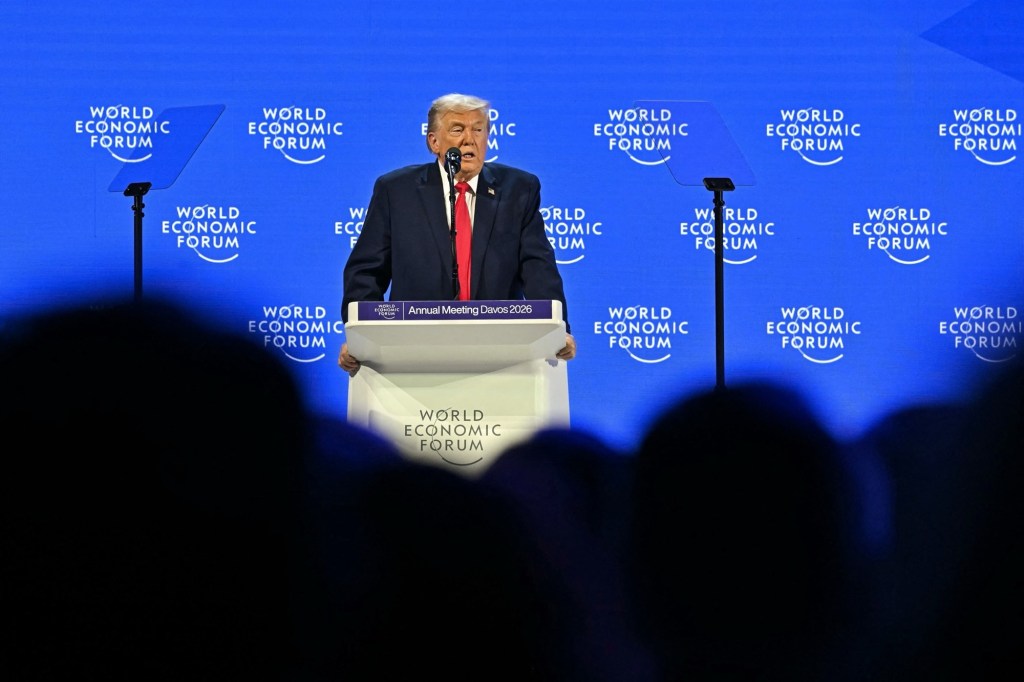
Speaking today at the World Economic Forum in Davos, Donald J. Trump delivered a message that sharply contrasted with the global technocratic tone that has come to define the annual gathering. Rather than embracing managed decline, multilateral dependency, or climate-first economic planning, President Trump outlined a vision centered on national strength, reciprocal trade, and economic realism.
The White House framed the speech as a declaration of “American prosperity and transatlantic strength.” In practice, it was also a rebuke of the policies that many Americans—and increasingly Europeans—associate with stagnation, inflation, and diminished sovereignty.
America First, Without Apology
Trump’s remarks emphasized that economic growth begins at home. He highlighted domestic energy production, manufacturing reshoring, tax competitiveness, and regulatory rollback as the foundation of renewed American prosperity. Unlike prior administrations that treated global economic leadership as a matter of moral signaling, Trump argued it must be grounded in results: jobs, wages, and industrial capacity.
He reiterated that the U.S. would continue to welcome trade—but only trade that is fair, reciprocal, and enforceable. That position resonates with voters who watched decades of globalization hollow out industrial regions while enriching multinational firms and foreign competitors.
A Redefined Transatlantic Relationship
Trump also addressed Europe directly, calling for stronger NATO burden-sharing and a more balanced economic partnership. His message was blunt: alliances work best when responsibilities are shared, not outsourced to American taxpayers.
This approach, while controversial in diplomatic circles, has increasingly gained traction as European governments face their own fiscal pressures and voter backlash against energy shortages, overregulation, and defense underinvestment.
Rather than weakening transatlantic ties, Trump argued that realism strengthens them—by ensuring that alliances are sustainable and rooted in mutual interest rather than ideology.
Energy, Industry, and the Limits of Global Planning
A central theme of the speech was energy independence. Trump criticized policies that prioritize climate targets over affordability and reliability, pointing to energy-driven inflation and industrial decline in parts of Europe as cautionary examples.
The administration’s stance rejects centralized economic planning and top-down “stakeholder capitalism” in favor of market-driven growth, domestic production, and national resilience. In a forum often dominated by abstract commitments and global frameworks, Trump’s focus on tangible outcomes stood out.
Davos Heard a Different Message
While Davos has traditionally celebrated globalization as an unquestioned good, Trump’s appearance underscored a shifting political reality. Across Western democracies, voters are demanding borders that function, economies that produce, and governments that prioritize citizens over institutions.
Trump did not ask Davos for approval. He presented a model—and dared others to compare results.
Bottom Line
President Trump’s Davos speech reaffirmed a worldview that has defined his political career: prosperity flows from sovereignty, strength, and accountability. Whether global elites embrace that message is beside the point. The intended audience was back home—and increasingly, voters abroad who are questioning whether the Davos consensus still serves them.
For readers, the takeaway is clear: the debate is no longer globalization versus isolation. It is realism versus managed decline—and Trump made clear which side he believes wins.
 Republic Dispatch