
By Republic Dispatch Staff
As global attention drifts toward the Middle East and Asia, a quieter but consequential front is emerging in the North Atlantic. According to reporting from The Guardian and the BBC, Donald Trump is openly threatening a new round of tariffs on the European Union—moves that could ripple far beyond Brussels and Washington and into the strategically sensitive territory of Greenland.
The dispute is framed publicly as another trade imbalance fight, but the subtext is unmistakable: Arctic access, critical infrastructure, and long-term geopolitical leverage.
A Familiar Tool, A New Battlefield
Trump’s tariff playbook is well known. During his first term, tariffs were deployed as blunt leverage to force renegotiations, reset trade relationships, and extract concessions. What’s different now is the geography.
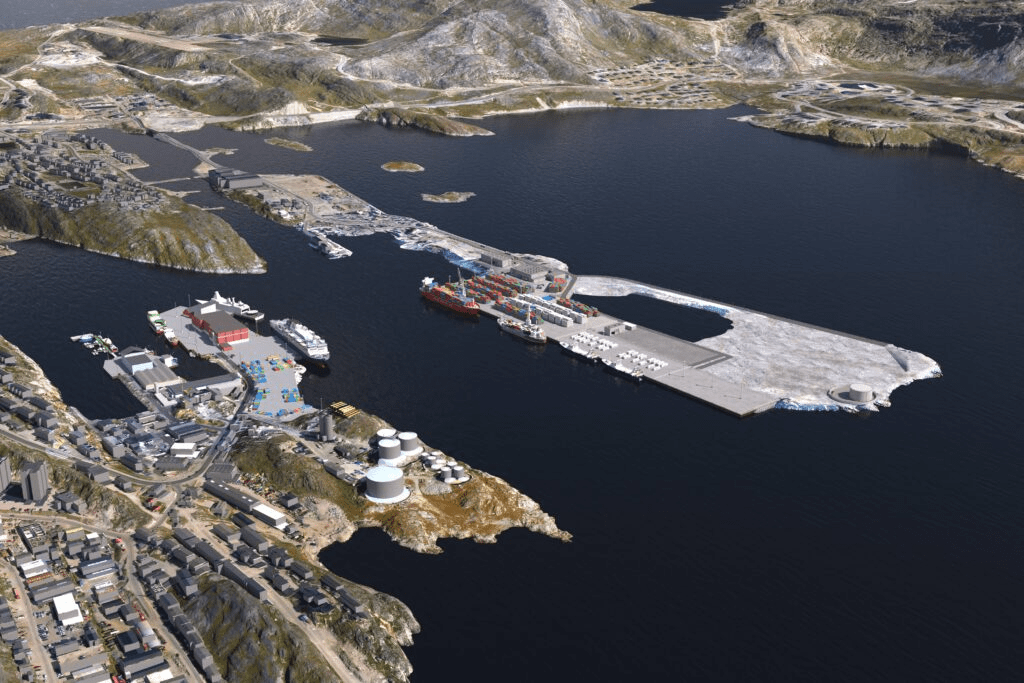
Greenland—an autonomous territory within the Kingdom of Denmark and closely tied to the European Union through trade and infrastructure—has become a flashpoint. The BBC notes European aviation and logistics groups warning that tariffs and retaliatory measures could disrupt investment, airport modernization, and supply chains across the Arctic.
From a center-right perspective, this is not random. Greenland sits astride emerging Arctic shipping lanes, rare earth mineral deposits, and future military logistics routes. Any trade friction that weakens European influence there strengthens Washington’s hand.
Europe’s Strategic Blind Spot
EU officials and industry groups have responded with predictable alarm, warning of “trade war dynamics” and collateral damage to aviation, energy, and transport. But these reactions underscore a deeper problem: Europe has been slow to recognize how economic policy and security policy are converging in the Arctic.
For years, European governments treated Greenland as a peripheral development challenge—funding airports, ports, and green projects without a coherent strategic framework. Trump’s tariff threat forces a reckoning: trade access is no longer guaranteed when strategic interests are on the line.
From a U.S. perspective, particularly among national security–minded conservatives, this is overdue realism.
Tariffs as Leverage, Not Ideology
Critics will frame Trump’s approach as reckless protectionism. Supporters see something else entirely: leverage.
Tariffs, in this view, are not about closing markets but about forcing allies to align on priorities—security cooperation, infrastructure control, and strategic investment screening. Greenland’s infrastructure matters not because of tourism, but because of who controls runways, ports, and data in the High North.
Trump’s earlier, much-mocked interest in “buying Greenland” now looks less outlandish and more prescient. Control doesn’t require ownership; it requires leverage.
The Arctic Is No Longer Neutral
The Guardian reports European fears that escalating tariffs could chill investment at a moment when Arctic competition is intensifying, with Russia and China both expanding their footprint. That concern is valid—but it also highlights Europe’s dependency on stable U.S. trade relations to sustain its Arctic ambitions.
From a center-right lens, the message is simple: geopolitics has returned, and economic policy is one of its sharpest tools.
Whether or not tariffs are ultimately imposed, the threat alone has succeeded in reframing Greenland from a remote territory into a strategic prize.
Bottom Line
This is not just another Trump trade spat. It is a signal that the Arctic—once treated as an afterthought—is now a frontline arena where trade, security, and sovereignty collide.
Europe can protest. It can warn. Or it can adapt.
Trump, once again, is forcing the issue.
 Republic Dispatch