
By Republic Dispatch Staff
In Washington and much of the mainstream press, the dominant narrative this week has been that President Donald Trump has “blinked” or backed away from confrontation with Iran. The language suggests de-escalation, hesitation, or even retreat.
But the hard evidence unfolding across the globe tells a very different story.
While headlines focus on words, the United States military is quietly—but unmistakably—moving steel, fuel, and manpower into position. And in geopolitics, those actions matter far more than commentary.
Strategic Airlift to the Indian Ocean
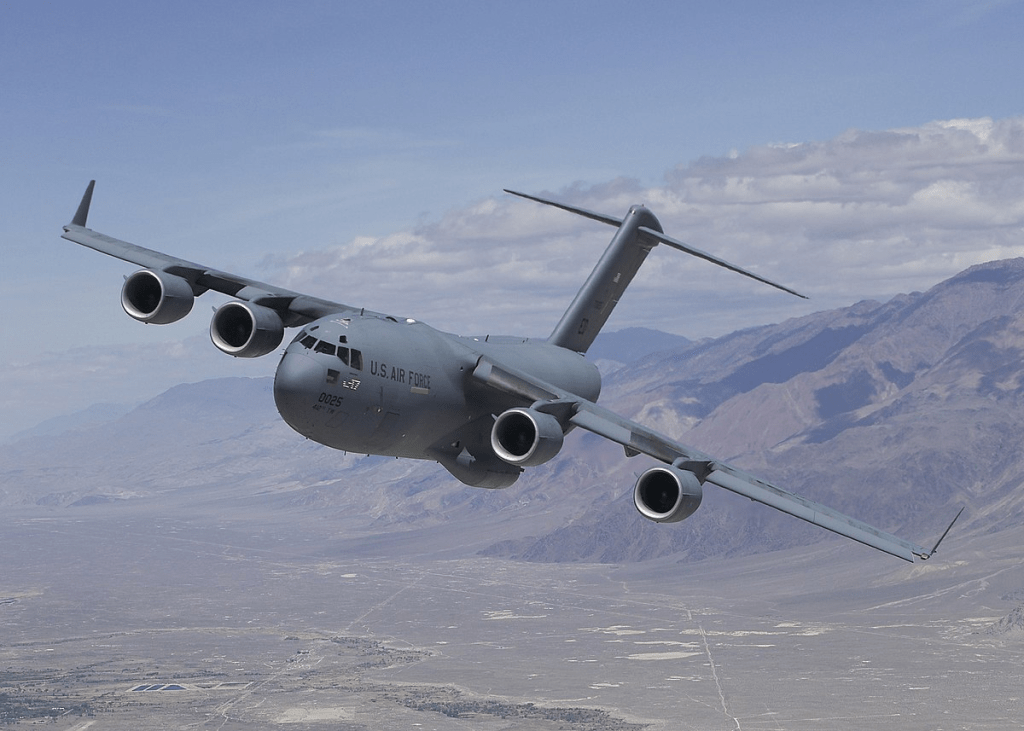
According to open-source military tracking and reporting, multiple U.S. Air Force C-17A Globemaster III heavy cargo aircraft are en route to Diego Garcia, a remote but critically important U.S.–U.K. military base in the Indian Ocean.
Diego Garcia is not a routine stop. It is the primary forward staging hub for long-range U.S. strike capabilities, including B-2 Spirit stealth bombers and B-52 Stratofortress aircraft. When heavy airlift assets begin moving in volume to that location, it typically signals preparations for sustained operations—not symbolic gestures.
Logistics win wars. Fuel, munitions, spare parts, and personnel do not move unless planners anticipate potential action.
Carrier Strike Groups Closing In
At sea, the signal is even clearer.
The U.S. Navy is moving two carrier strike groups toward the broader Middle East region:
- USS Abraham Lincoln, already en route from the Pacific
- USS Harry S. Truman, preparing to deploy from the Atlantic
Together, these forces represent roughly 180 combat aircraft, supported by cruisers, destroyers, submarines, and an estimated 10,000 sailors and Marines. Carrier strike groups are not diplomatic props. They are among the most expensive, complex, and lethal instruments of American power—and they are deployed sparingly.
When two are sent toward the same theater, it is meant to be noticed.
Why the Disconnect Between Media and Reality?
The gap between media framing and military reality reflects a broader problem in modern coverage of national security.
Statements, leaks, and anonymous briefings are easy to publish. Force posture changes are harder to explain, require context, and do not fit neatly into partisan narratives. Yet history shows that U.S. administrations—Republican and Democrat alike—often speak softly while moving decisively behind the scenes.
President Trump, in particular, has long used public ambiguity as leverage. Delayed speeches or restrained rhetoric can buy time, confuse adversaries, or lull opponents into miscalculation. Meanwhile, the Pentagon operates on timelines measured in weeks and months, not cable-news cycles.
Deterrence Still Runs on Credibility
Iran’s leadership understands this reality well. The regime in Tehran has survived for decades by reading signals, not press releases. Carrier deployments, bomber staging, and logistics pipelines carry far more weight than media speculation about political resolve.
This does not mean war is inevitable. In fact, such movements are often designed to prevent conflict by making the cost of escalation unmistakably clear. Deterrence only works when it is backed by credible force.
Right now, that credibility is being reinforced in real time.
The Bottom Line
Claims that the United States is backing down from Iran collapse under even minimal scrutiny. The military footprint tells a story of preparation, pressure, and leverage—not retreat.
Words can buy time. They can calm markets or shift narratives. But steel, jet fuel, and carrier decks write the actual story.
And at the moment, the story unfolding beyond the headlines is one of deliberate, calculated strength.
 Republic Dispatch