
By Michael Phillips | Republic Dispatch
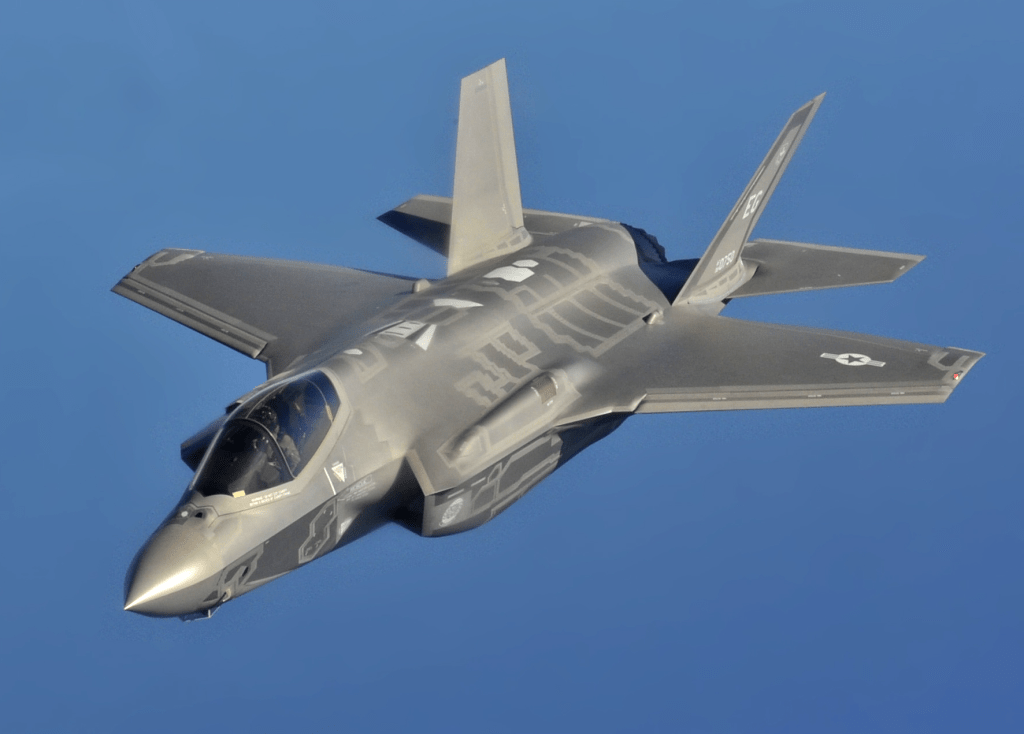
Canada’s long-running fighter jet saga has entered yet another politically charged chapter. A recent analysis at 19FortyFive highlights Saab’s renewed push to sell the JAS 39 Gripen to Canada, dangling a sweeping industrial package that promises jobs, domestic manufacturing, and export potential. The pitch comes as Ottawa reviews its commitment to the F-35A Lightning II, produced by Lockheed Martin.
At stake is not just an aircraft purchase, but Canada’s defense posture for the next half-century—its place inside NORAD, NATO, and the Five Eyes intelligence network.
The Offer: Jobs First, Jets Second
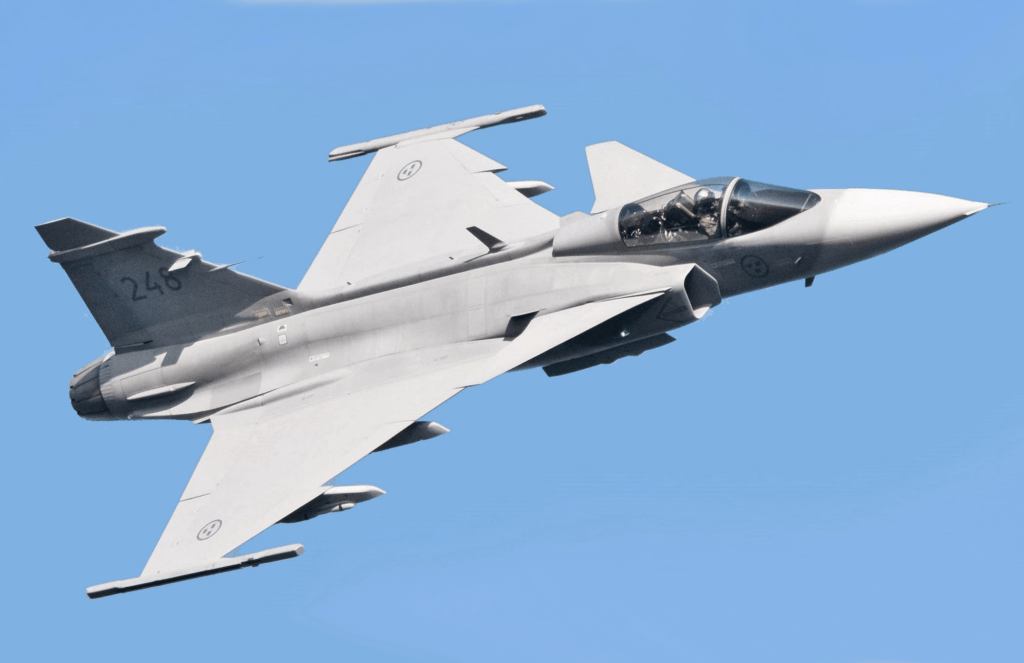
Saab’s proposal—first reported by CBC and analyzed by 19FortyFive—would have Canada buy 72 Gripen E fighters plus six GlobalEye airborne early-warning aircraft. In exchange, Saab pledges up to 12,600 Canadian jobs, production lines in Ontario and Quebec, and a national supplier network that could turn Canada into an export hub.
Industry Minister Mélanie Joly has welcomed the economic argument, noting that Ottawa can’t control U.S. politics but can control where defense dollars are spent. In an era of trade friction and “Buy Canadian” rhetoric, that message resonates.
The Capability Gap
But the industrial promise comes with a strategic trade-off. The F-35 is a true fifth-generation aircraft built around stealth, sensor fusion, and networked warfare. It was selected after a lengthy competition in which it reportedly outperformed rivals—including the Gripen—on capability and interoperability.
The Gripen E, while a capable and cost-effective 4.5-generation fighter, lacks very-low-observable stealth and relies on external stores that make it more detectable in contested airspace. For Canada, whose air force must defend vast Arctic approaches and integrate seamlessly with U.S. assets, that distinction matters.
Senior leaders in the Royal Canadian Air Force have warned that a mixed fleet—or a late pivot away from the F-35—would complicate training, logistics, and coalition operations for decades.
A Familiar Canadian Dilemma
Canada has been here before. From the cancellation of the Avro Arrow in 1959 to the drawn-out replacement of the CF-18 Hornet, fighter procurement has repeatedly pitted industrial policy against operational necessity. The current review under Prime Minister Mark Carney reflects the same tension: short-term economic gains versus long-term alliance credibility.
Supporters of the F-35 argue that Canada already made its choice after 25 years of analysis and delay—and that walking it back now would undermine confidence with allies at a time of renewed great-power competition.
The Bottom Line
Saab’s Gripen pitch is politically attractive and economically seductive. But defense procurement is not a jobs program first and foremost. It is about deterrence, interoperability, and readiness for worst-case scenarios.
Canada’s fighter decision will signal whether Ottawa prioritizes industrial offsets over strategic alignment—or whether it accepts the costs of fifth-generation capability as the price of remaining fully integrated with North American and NATO defense. The answer will echo far beyond the factory floor.
 Republic Dispatch