By Michael Phillips | Republic Dispatch
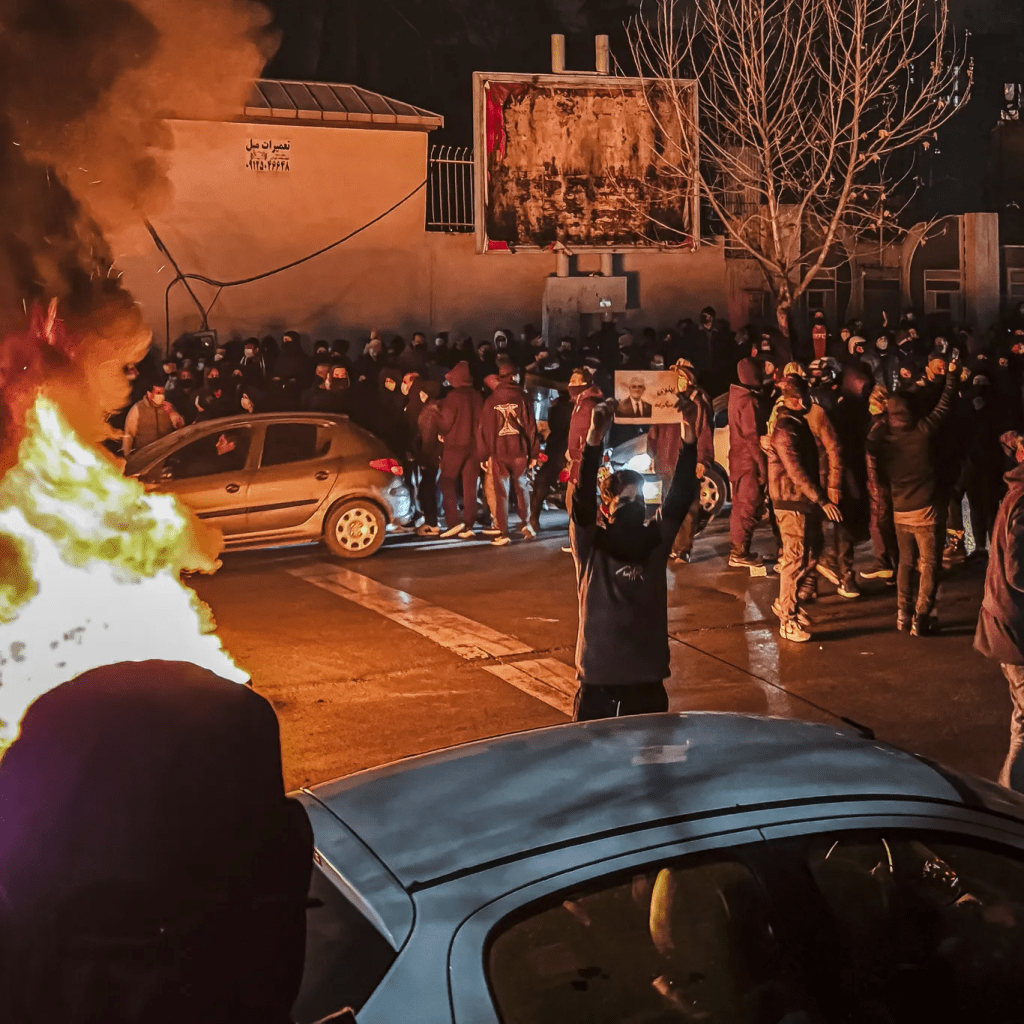
Iran is once again at the center of a global crisis. As of mid-January, widespread anti-government protests—driven by economic collapse, inflation topping 40 percent, and long-simmering anger toward the ruling clerical regime—have been met with a brutal state crackdown. Human rights organizations and regional media estimate the death toll anywhere from 500 to more than 2,400 protesters, with thousands more injured or detained.
The unrest is not confined to one city or faction. Demonstrations have erupted across Tehran and major provincial centers, fueled by collapsing purchasing power, energy shortages, unpaid wages, and a growing belief that the regime is no longer capable of governing. What began as economic protests has increasingly taken on the language of regime change.
Against this backdrop, Donald Trump has issued unusually direct warnings to Tehran—raising the question of what, if anything, the United States is prepared to do as thousands of Iranians are killed in the streets.
Trump’s Message: A Red Line on Mass Killing
Over the past several days, Trump has publicly condemned the Iranian government, canceled diplomatic engagements, and warned that continued executions or mass killings would trigger consequences. In characteristic fashion, he has offered strong language—saying “help is on the way”—while stopping short of spelling out a specific course of action.
That ambiguity is deliberate. According to administration officials, Trump has been briefed on a range of options and is keeping pressure high without committing the U.S. to a single path too early. The posture reflects a familiar Trump doctrine: deterrence through uncertainty.
The Menu of Options on the Table
While no final decisions have been announced, the administration’s deliberations reportedly include several broad categories of response:
1. Targeted Military Strikes
Limited air or missile strikes could be directed at regime infrastructure, including facilities tied to the Islamic Revolutionary Guard Corps, nuclear-related sites, or command-and-control assets. Officials emphasize that there is no appetite for boots on the ground, but kinetic strikes remain a lever if executions escalate.
The risk, however, is rapid regional escalation. Iran has already warned it would retaliate against U.S. bases, and Israel has reportedly moved to a heightened state of alert.
2. Cyber Operations
Cyber tools offer a way to degrade regime capabilities without immediate physical destruction. Past U.S. and allied cyber actions against Iran demonstrate that such measures can disrupt military and nuclear programs—but rarely produce decisive political outcomes on their own.
3. Expanded Sanctions
Trump’s preferred pressure tactic remains economic. Additional sanctions targeting senior regime figures, financial networks, and remaining export channels could further isolate Tehran. Critics argue sanctions alone may not stop a shooting crackdown already underway.
4. Support for Protesters
Non-kinetic assistance—such as enabling satellite internet access to bypass state blackouts or amplifying anti-regime messaging—has gained traction among advisers. These measures aim to sustain protest momentum while limiting direct U.S. entanglement.
5. Diplomatic Freeze
For now, Trump has halted talks altogether, signaling that diplomacy resumes only if the killings stop. This hard pause contrasts with prior administrations’ emphasis on constant engagement, and reflects skepticism that negotiations can restrain a regime fighting for survival.
The Strategic Dilemma
Each option carries real costs. Military action could rally Iranian nationalism and hand the regime a foreign enemy to blame. Inaction, on the other hand, risks signaling that mass repression can proceed without consequence. History offers little comfort: external pressure has weakened Iran’s capabilities before, but rarely produced internal political transformation on a predictable timeline.
Trump’s rhetoric has raised expectations among protesters—and boxed him in politically. If executions continue and Washington does nothing, critics will accuse him of empty threats. If he acts too forcefully, he risks igniting a wider conflict in an already volatile region.
What Comes Next
For now, the administration appears to be buying time—gathering intelligence, refining options, and watching whether the regime escalates further. The protests themselves remain the most unpredictable variable. If Iran’s streets stay alive, pressure on Washington to “do something” will only grow.
What is clear is that Iran has entered a moment of genuine instability—and that the decisions made in Washington over the coming days could shape not just the fate of the protests, but the balance of power in the Middle East for years to come.
Republic Dispatch will continue to follow developments as this story unfolds.
 Republic Dispatch