By Michael Phillips | Republic Dispatch
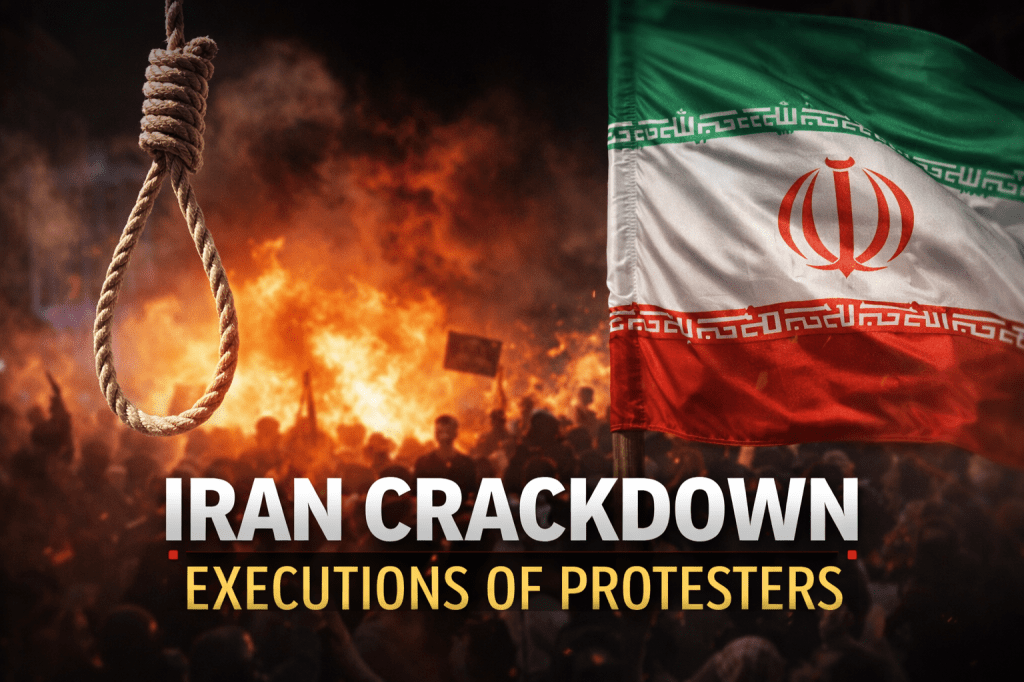
Iran’s Islamic Republic appears poised to escalate its crackdown on nationwide anti-regime protests, with authorities signaling the imminent execution of arrested demonstrators following what human-rights groups describe as rushed, opaque judicial proceedings.
A widely circulated post from Visegrád 24 reports that Iranian officials have announced the first executions of individuals accused of serving as “ringleaders of unrest,” with hangings scheduled to begin Wednesday morning, January 14, 2026. Among those reportedly sentenced to death is Erfan Soltani, a 26-year-old protester arrested earlier this month.
According to human-rights organizations and exile media, Soltani was detained during demonstrations near Karaj, west of Tehran, and sentenced within days. His family was informed of the death sentence on January 11 and permitted only a brief 10-minute visit. Reports indicate he was denied legal counsel, a public trial, or any meaningful right to appeal—hallmarks of Iran’s so-called “revolutionary court” process when dealing with political dissent.
Iranian authorities have not publicly confirmed Soltani’s case in state media, a pattern consistent with prior executions tied to protest movements. However, rights groups warn that the lack of official denial, combined with prior precedents, suggests the threat is real.
A Familiar Tool of Repression
Executions have long served as a central instrument of control for the Islamic Republic, particularly during periods of mass unrest. Charges such as “enmity against God” or “corruption on earth”—vaguely defined offenses under Iran’s penal code—are frequently used to justify death sentences against political opponents.
Organizations including Amnesty International and Human Rights Watch have repeatedly documented Iran’s use of expedited trials, forced confessions, and executions to intimidate protest movements. In past protest waves, international pressure has occasionally delayed executions—but rarely reversed sentences.
Some reports suggest that at least some of the planned executions may be carried out publicly, a tactic intended to instill fear and deter further demonstrations.
Protests Enter a Dangerous Phase
The current unrest—often referred to as the 2025–2026 Iranian protests—began in late December amid economic collapse, inflation, energy shortages, and long-standing public anger toward clerical rule. Demonstrations have spread across all provinces, drawing in students, workers, and bazaar merchants.
Protest slogans have ranged from demands for economic reform to outright rejection of the Islamic Republic, with some demonstrators openly referencing Reza Pahlavi, the exiled son of Iran’s last shah.
Security forces have responded with live ammunition, mass arrests, internet blackouts, and hospital raids to detain wounded protesters. Estimates of those killed vary widely, but independent monitors suggest casualties may number in the hundreds or more.
The reported death sentences mark a potential turning point: a shift from street-level repression to state-sanctioned executions designed to terrorize the population into submission.
International Stakes
While Western governments have so far issued limited statements, the prospect of rapid executions places renewed pressure on international institutions and foreign policymakers. Iran’s leadership has historically used executions to demonstrate internal control while daring outside actors to respond.
For now, activists are racing to publicize names like Erfan Soltani in hopes that international scrutiny might slow or halt the process. Whether that pressure materializes—and whether it has any effect—remains uncertain.
What is clear is that Iran’s leadership appears prepared to move from suppression to spectacle, signaling that dissent will not merely be punished, but publicly eliminated.
 Republic Dispatch