
By Michael Phillips | Republic Dispatch
The U.S. Senate’s 52–47 procedural vote to advance a War Powers Resolution limiting President Donald Trump’s authority in Venezuela has been framed as a principled stand for constitutional balance. In reality, it looks more like Congress reasserting process after the fact—once a long-sought outcome has already been achieved.
Less than a week earlier, U.S. forces executed Operation Absolute Resolve, capturing Venezuelan strongman Nicolás Maduro and extraditing him to New York to face longstanding federal charges tied to narco-terrorism and drug trafficking. For two decades, Washington talked tough about Maduro’s regime. In early January, it finally acted.
Now comes the institutional recoil.
A Law Enforcement Action—With Military Muscle
The Trump administration has argued—credibly—that the operation fell closer to a high-risk law enforcement action than a traditional war. Maduro was already under U.S. indictment. The mission’s objective was narrow: neutralize air defenses, extract the target, get out. There was no declaration of war, no occupation force, and no months-long bombing campaign.
Critics counter that airstrikes are airstrikes, and that Congress must authorize force. That debate is legitimate. But it also ignores a political reality: Congress has spent decades outsourcing hard decisions to the executive branch, only rediscovering its constitutional conscience when the outcome becomes controversial—or inconvenient.
The Bipartisan Break—and What It Signals
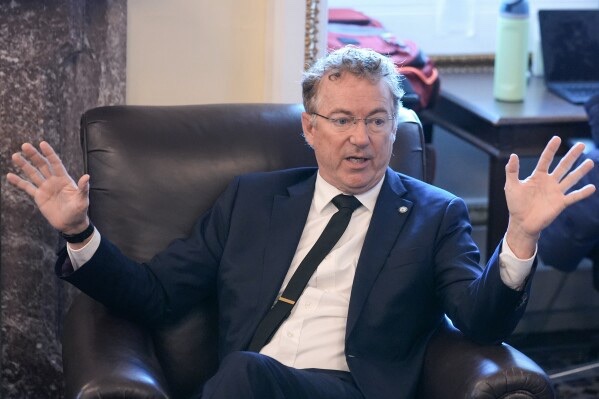
Five Republicans—Rand Paul, Susan Collins, Lisa Murkowski, Josh Hawley, and Todd Young—joined Democrats to advance the resolution. Their concerns range from civil libertarian unease to fears of mission creep. Those worries are not frivolous.
But timing matters. Congress did not act before Maduro was captured. It did not force a debate while Venezuelans lived under a narco-state that fueled regional instability and mass migration. It is acting now, when the most dangerous phase is already over, and the United States holds its primary leverage.
That makes this vote feel less like leadership and more like hedging.
Process vs. Consequences
The deeper question is not whether Congress has authority—it does—but whether it is prepared to own the consequences of restraint. For years, lawmakers condemned Venezuela’s collapse, its ties to cartels, and its alliance with hostile powers, while doing little beyond sanctions and statements.
When an administration finally takes decisive action and succeeds, Congress rushes to put the brakes on future moves—without offering a serious alternative strategy.
If lawmakers believe the United States should never act unilaterally against indicted narco-state leaders, they should say so plainly. If they believe such actions are acceptable only once, but never again, they should explain why. What they should not do is posture after the fact, treating success itself as the problem.
The Real Risk Going Forward
A final War Powers vote may pass the Senate and still die in the House or meet a presidential veto. But the signal has already been sent—to allies, adversaries, and future presidents—that even decisive, limited actions will be second-guessed immediately.
That message matters. It tells hostile regimes that Washington’s internal divisions remain a strategic vulnerability. It tells future presidents that acting boldly—even successfully—invites institutional backlash.
Congress is right to debate war powers. It is wrong to pretend this debate is happening in a vacuum.
Maduro is in custody. A narco-state leader is off the board. The question now is whether Congress wants to help shape what comes next—or simply reclaim process points after results it never quite expected to see.
 The Republic Dispatch