
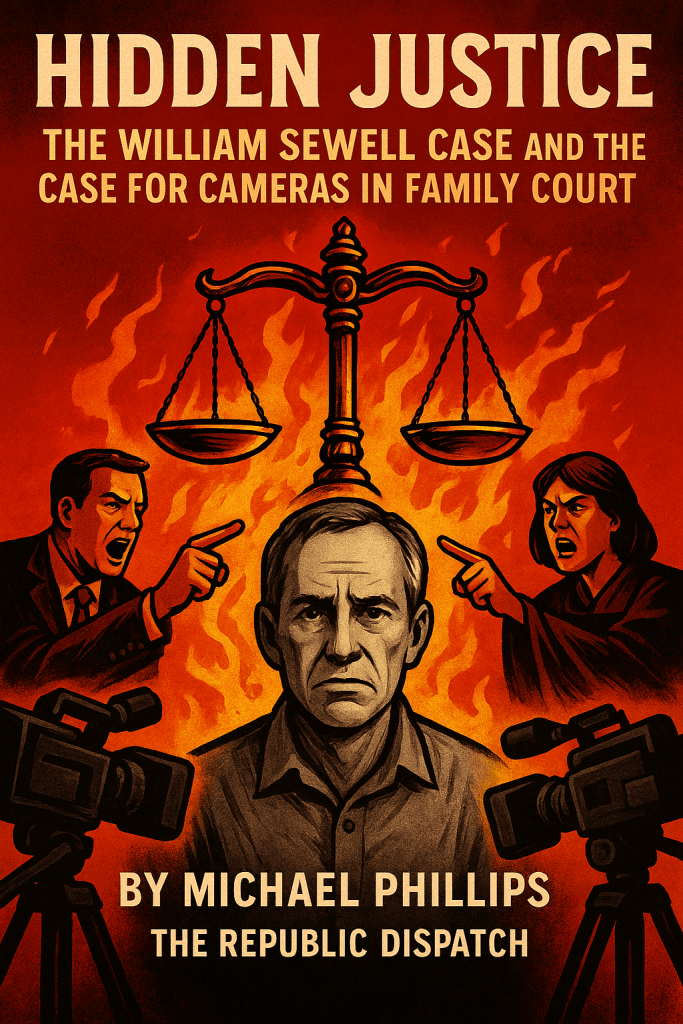
In a small courtroom in Dorchester County, South Carolina, a self-employed mechanic named William Sewell is fighting for his child, his reputation, and his rights. He is doing so alone—without a lawyer, without a jury, and without a single camera to show the world what is happening.
Sewell’s case is not just about custody. It’s about power, transparency, and whether a pro se citizen—one who cannot afford an attorney—has any shot at justice in a courtroom that operates with no public scrutiny.
According to Sewell, he has been berated, bullied, and silenced—not only by opposing counsel Donnie Gamache, but by the very judge assigned to his case, former legislator Mandy Kimmons. He alleges that Gamache has made verbal threats, including the threat of defamation suits against both Sewell and myself, the reporter covering the case. And when I looked into the ability to observe the hearings or review the transcripts, I was told — like the public always is in family court — “No. It’s private.”
But here’s the thing: justice is not private. And justice should not be a secret.
A Broken System, Hidden from View
Family court is one of the only places in America where your constitutional rights can be stripped in silence. There’s no jury. There’s no open gallery. No cameras. And often, no transcript unless you pay for one—something few self-represented parents can afford.
Many court watchers across the country try to show up when they can. But there are too few of them. And most pro se litigants don’t even know they can request their presence. William Sewell didn’t. He’s been standing alone in front of what he calls a “legal firing squad”—with a $25,000 guardian ad litem bill, and a staggering $130,000 in attorney fees now being demanded by Gamache and his team of five lawyers and paralegals.
This isn’t just a legal battle. It’s financial and psychological warfare against a citizen who dared to represent himself, and only after three prior attorneys failed to do anything to protect him.
And it’s all happening behind closed doors.
Why Cameras Matter
The public has a right to know how their tax dollars are being spent—especially if that money is funding court officers who are alleged to be threatening citizens, fabricating evidence, or running trials that appear, at best, hostile and biased.
We require police officers to wear body cameras. Why not judges and attorneys?
The answer we’re given is always the same: “To protect the child’s privacy.”
But this excuse has become a shield—not for children, but for misconduct. With redaction tools, delay settings, and audio protections, the privacy of minors can still be preserved. What cannot be preserved is public trust in a court system that operates in darkness.
If the attorneys and judges involved in William Sewell’s case have done nothing wrong, they should welcome cameras. They should demand them. Because nothing protects the innocent like the truth. And nothing ensures justice like accountability.
From the Bench to the Battlefield
William Sewell may be a mechanic, not a lawyer. But he is a citizen. A father. And like every other American, he has a right to a fair trial—and a right to be heard.
Instead, he says he’s been shouted down, mischaracterized, and buried in motions he doesn’t understand. He’s tried to speak up. He’s written affidavits. He’s asked for time to respond. And yet the system rolls on—crushing him under fees, filings, and procedures he never agreed to and can’t afford.
Even now, as I write this, the court seems more concerned with the articles I’ve published than with the allegations of judicial and attorney misconduct they contain. I’ve been warned: Watch what you say. You might get sued.
To that I say: Good. Let the public see. Let the court record it. Put it on camera. I demand a public trial.
Because justice should never fear the light.
I can’t wait for the news headlines. “Donnie Gamache sues a union journalist and disabled father for publicizing the truth.”
One Man’s Case, Every Citizen’s Fight
This isn’t just about William Sewell. This is about the thousands of parents, caregivers, and citizens who walk into family court each year with nothing but a file folder and a trembling hope that someone will listen. I am one of them.
But no one sees them. No one hears them. Because the doors are closed.
We don’t need more silence. We need more sunlight.
Put cameras in the courtroom.
Let the public see what justice really looks like.
Let them see what happens to men like William Sewell.
And then let them decide if this is a system worth defending—or one in desperate need of reform.
Follow the series here.
Michael Phillips is a journalist and advocate for family court transparency. His work focuses on exposing judicial abuse, ADA violations, and systemic barriers to justice in America’s domestic courts.
All claims in this article are based on the personal experiences and allegations made by William H. Sewell. This article includes opinions and reporting based on interviews, court documents, and publicly available information. Any named parties are presumed innocent of any wrongdoing unless proven otherwise. Mr. Gamache has been contacted for comment.
 Republic Dispatch