
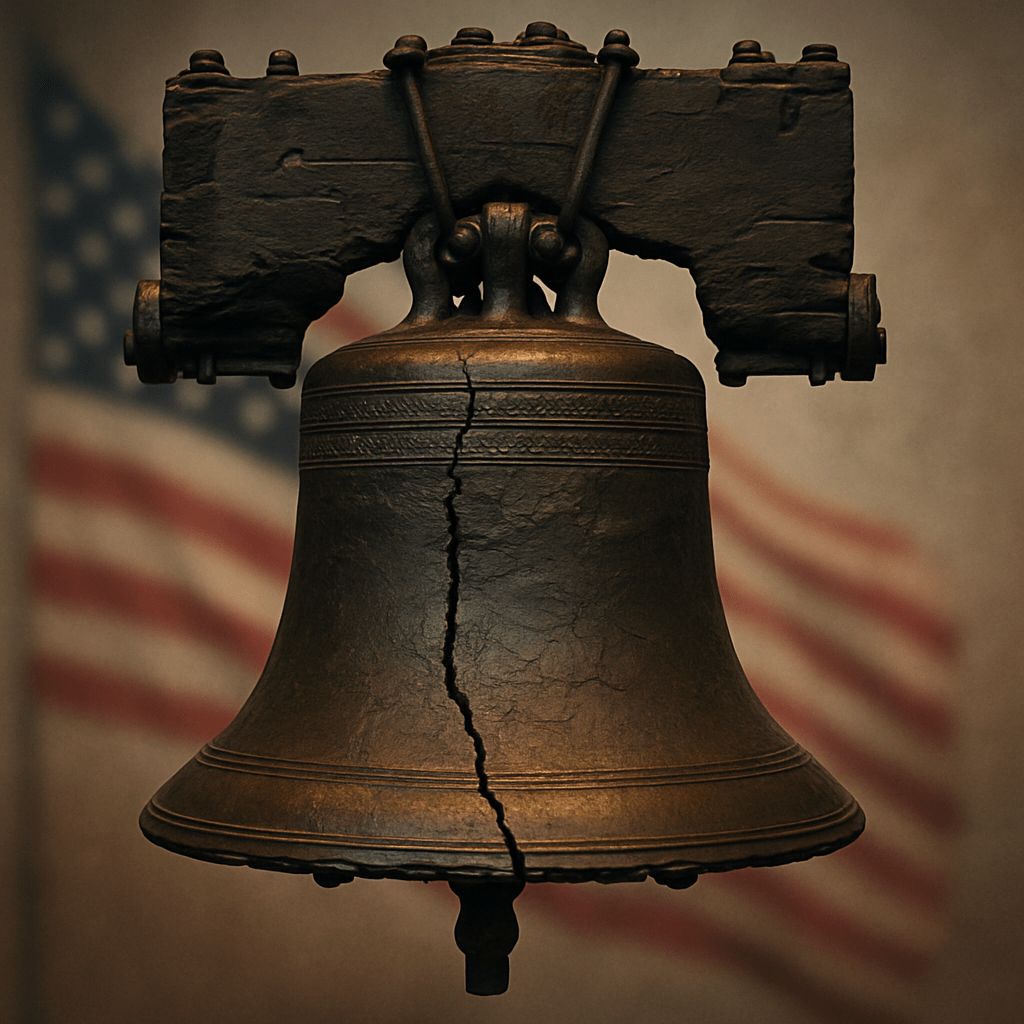
There was a time in American history when rugged individualism wasn’t just a slogan — it was the way of life.
From the earliest colonial days through the devastation of World War II, it shaped how Americans thought, worked, built families, and faced hardship.
It wasn’t about radical self-absorption. It was about responsibility. Resilience. The deep-rooted belief that if you worked hard, stayed disciplined, and looked out for your family and neighbors, you could make a life worth living.
But somewhere along the way, something broke.
Post-War Exhaustion: The First Fracture
World War II didn’t just drain America’s money; it drained its soul.
Families donated everything they could to the war effort. They lived on rations. Women built the bombs and planes while men bled and died overseas. By 1945, the entire country was exhausted — physically, emotionally, spiritually.
When the war ended, people didn’t just celebrate — they crashed.
And for the first time, large numbers of Americans started leaning on the government in ways that would have seemed unthinkable 20 years earlier.
Both parents working became normal, not just because they needed the money, but because the trauma of war taught them that “extra” was safety.
The government started to expand its reach into homes, schools, and communities.
And little by little, rugged individualism faded into a fog of survival and “progress.”
The Rise of Dependency and the Death of Structure
As the decades passed, tax rates on the middle class quietly climbed.
Government programs — some well-intentioned, some purely political — ballooned.
The mantra shifted from “raise your own kids, build your own life” to “it takes a village” — a village increasingly controlled by bureaucrats, lawyers, judges, and mental health “experts.”
And then came the real damage:
The structure kids used to rely on — families, communities, discipline, self-reliance — eroded right under their feet.
With both parents at work and the government stepping in as the third parent, children were left to fend for themselves emotionally.
Many became what some call “feral” — growing up with little guidance, loose boundaries, and a deep sense of emotional abandonment.
Is it any wonder youth crime exploded?
Or that mental health issues skyrocketed among young people?
Or that an entire generation became susceptible to any movement that promised belonging, even if it came at the expense of personal freedom and critical thinking?
The Courts, the Bar Associations, and the Betrayal of the People
Meanwhile, the very systems that were supposed to protect American rights — the courts, the legal profession, the judiciary — quietly shifted from enforcing law to enforcing policy.
Judges stopped being neutral arbiters and started acting like unelected politicians.
Bar associations became gatekeepers, protecting their own and shielding judges and lawyers from real accountability.
Instead of standing up for rugged individualism — for the rights of the citizen against the state — they helped build a system where families could be torn apart for profit, parents criminalized for trying to protect their kids, and constitutional rights treated like optional guidelines instead of sacred guarantees.
The backlash is finally starting to show.
Across America (and even across parts of Europe and Canada), people are waking up.
Parents are fighting back against school systems, courts, and government agencies that think they own their children.
Young adults — even those who grew up in the chaos — are questioning the narratives they’ve been fed.
Judges are finally feeling the heat, as activists and citizens begin to challenge their “immunity” and expose their misconduct.
Even the American Bar Association and local Bar groups are scrambling to protect their bread and butter, seeing the writing on the wall.
We’re Not Going Back to Sleep
The truth is, we can’t undo the damage that’s been done.
We can’t go back to 1945, or 1776, or any other mythic golden age.
But we can bring back the spirit that built this country in the first place:
- Personal responsibility over government dependence
- Family and community over bureaucratic control
- Courage to fight corruption instead of cowering from it
- A fierce defense of constitutional rights for every citizen
This isn’t about left or right.
It’s about survival — and dignity.
It’s about remembering that freedom doesn’t come from a government program or a courthouse ruling.
It comes from everyday people deciding, once again, to stand up, take the hits, and rebuild what was lost.
The wheels might’ve fallen off for a while.
But make no mistake:
The spirit of rugged individualism is waking up. And this time, it’s not going quietly.
 Republic Dispatch