
The Arrest of Ryan Wedding and the Anatomy of a Transnational Crime Network
By Republic Dispatch Staff
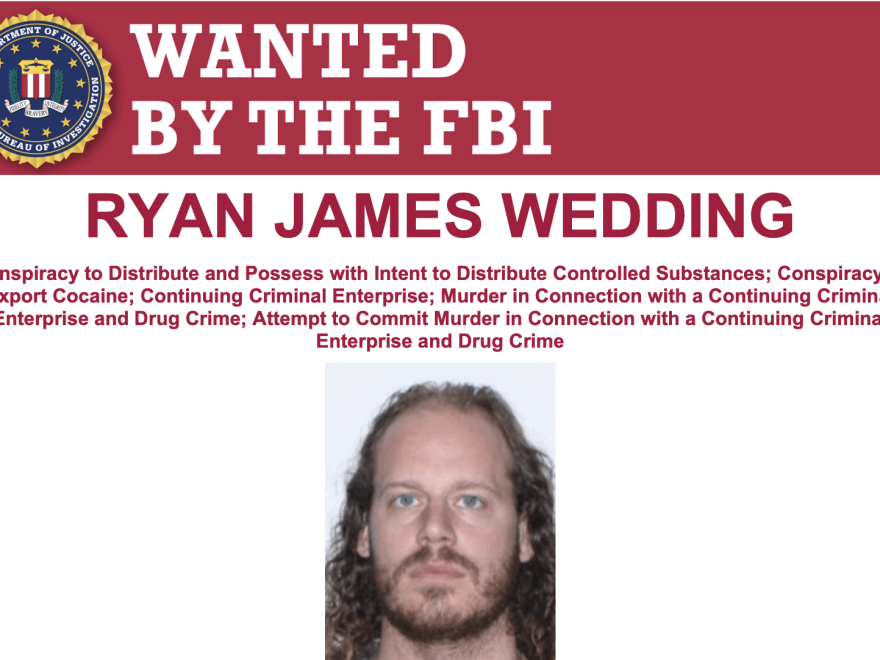
The arrest of Ryan Wedding marks one of the most dramatic falls from grace in modern international crime enforcement—a story that spans elite sport, organized crime, and alleged acts of extreme violence tied to global drug trafficking.
Wedding, a former Canadian Olympic snowboarder who competed at the 2002 Winter Games in Salt Lake City, was taken into custody in Mexico on January 22, 2026, following a years-long manhunt. U.S. officials confirmed his capture the following day, announcing that he had been extradited to the United States to face sweeping federal charges, including leading a massive transnational drug trafficking operation and orchestrating the murder of a federal witness.
Olympic Promise, Criminal Turn
Born September 14, 1981, in Thunder Bay, Ontario, Wedding grew up in a sports-oriented family and emerged as a standout snowboarder in his teens after moving to British Columbia. He made Canada’s national team at just 15 years old and represented his country at the 2002 Winter Olympics, finishing 24th in the men’s parallel giant slalom.
But after his competitive career ended, Wedding’s trajectory changed sharply. In 2010, he was convicted in the United States for conspiracy to distribute cocaine, stemming from activity between 2008 and 2009. He served roughly four years in federal prison. According to prosecutors, that conviction did not end his criminal activity—it marked an escalation.
Alleged Cartel Ties and a Global Pipeline
Federal authorities allege that Wedding went on to become a senior figure in a sprawling narcotics enterprise operating in close coordination with the Sinaloa Cartel, one of the world’s most powerful drug trafficking groups.
According to indictments and FBI statements, Wedding’s network allegedly moved hundreds of kilograms of cocaine per shipment from Colombia through Mexico and Southern California, with distribution routes extending deep into the United States and Canada. Some estimates cited by investigators suggest that as much as several metric tons of cocaine annually flowed through Los Angeles alone, generating billions in illicit revenue.
Authorities describe the organization as disciplined, well-financed, and brutally enforced—using violence, intimidation, and murder-for-hire to protect its operations.
Murder, Witness Intimidation, and a Superseding Indictment
The case took a darker turn in late 2025. A superseding federal indictment charged Wedding with orchestrating the assassination of a federal witness who was preparing to testify against him in a major drug case. Prosecutors allege that Wedding placed a bounty on the witness, used online tools to track his location, and ordered the killing while hiding in Mexico.
The witness was reportedly gunned down in Colombia, along with additional acts of intimidation aimed at silencing cooperation with U.S. authorities. Additional charges include witness tampering, racketeering, and money laundering.
These allegations elevated the case from narcotics prosecution to one of the most serious federal criminal matters on the international stage.
Ten Most Wanted—and a $15 Million Price Tag
In 2025, the FBI added Wedding to its Ten Most Wanted Fugitives list, citing him as a high-risk international fugitive with cartel protection. The reward for information leading to his capture eventually reached $15 million—one of the highest ever offered.
Officials believe Wedding evaded arrest for more than a decade while directing operations from Mexico, allegedly benefiting from cartel safe havens and corruption-resistant logistics that allowed him to remain beyond reach—until now.
Arrest and What Comes Next
The arrest was the result of coordinated efforts between U.S. authorities, Canadian partners, and Mexican law enforcement. FBI Director Kash Patel and Attorney General Pam Bondi announced the capture publicly, describing it as a major blow to international drug trafficking networks.
Wedding now faces trial in U.S. federal court, where a conviction could result in life imprisonment.
A Broader Warning
The Ryan Wedding case underscores a sobering reality: elite status, wealth, and global mobility can sometimes shield criminal enterprises—until they don’t. It also highlights the evolving nature of organized crime, where traffickers leverage international borders, digital tools, and cartel infrastructure to operate at industrial scale.
For Republic Dispatch readers, the story is a reminder that the fight against transnational crime is not abstract. It is deeply tied to border security, international cooperation, and the rule of law—and when those systems fail, the consequences are measured in lives, not headlines.
More details are expected as court proceedings begin.
 Republic Dispatch
Makes one wonder about the criminal classes our government not only tolerates but protects:
Billionaires
Wall Street bankers
Corporate America
Health care Corporations
Private Equity Investor Groups
LikeLike