By Republic Dispatch Staff
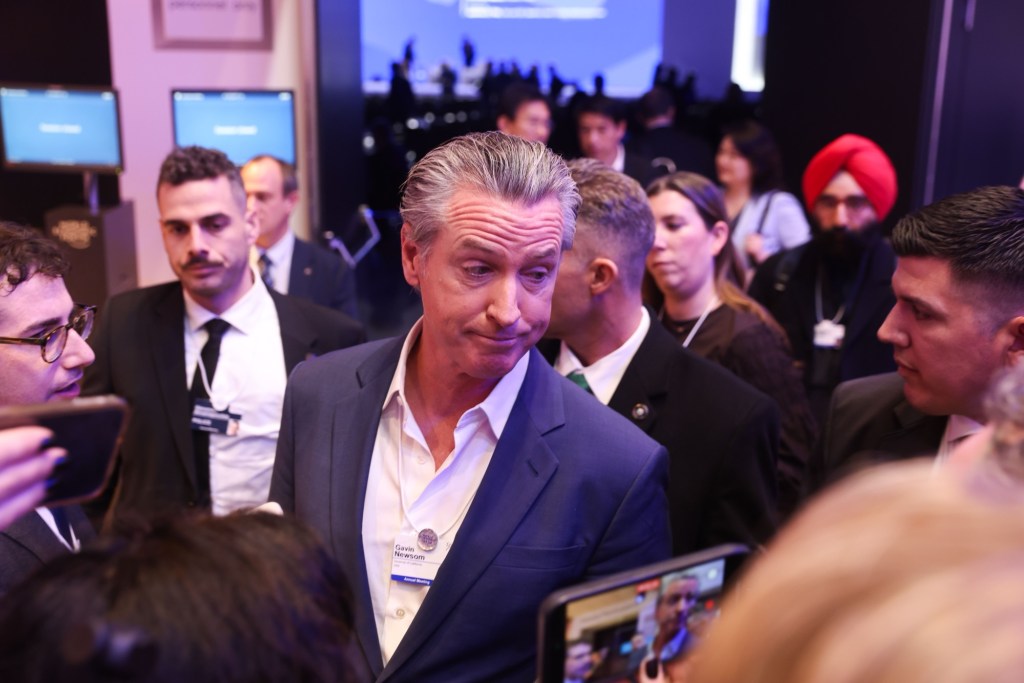
California Governor Gavin Newsom arrived at the World Economic Forum in Davos with a clear objective: use the global stage to cast himself as the anti-Trump, pro-globalization alternative ahead of an increasingly obvious 2028 presidential runway. Instead, his trip has devolved into a series of awkward flashpoints—none more symbolic than the sudden cancellation of his scheduled appearance at USA House.
According to a Politico exclusive published January 21, Newsom was informed at the eleventh hour that his planned fireside chat with Fortune at USA House would not take place. Newsom’s team alleges quiet pressure from the State Department under President Donald Trump, while organizers deny any political interference and insist Newsom remained welcome—just not as a featured speaker.
Whether the State Department intervened or not, the optics are unmistakable: the governor of California traveled halfway around the world to lecture global elites about American leadership, only to find himself sidelined at the official U.S. venue.
Davos as a Campaign Stop, Not a Policy Forum
Newsom’s Davos trip has looked less like a diplomatic mission and more like a soft-launch campaign tour. He openly criticized world leaders for being too accommodating to Trump, joked about bringing “knee pads” for them, dismissed Trump’s Davos address as “remarkably insignificant,” and waved off the administration’s Greenland push as unserious.
That posture may play well on social media and cable panels back home, but Davos is not Twitter—and global executives are not primary voters. At a forum built around stability, capital flows, and predictability, Newsom’s snarky moralizing landed flat.
Trump World Pushes Back—Hard
If Newsom expected polite silence, he miscalculated. Treasury Secretary Scott Bessent delivered a blistering rebuke, mocking Newsom’s record and persona while tying California’s troubles—out-migration, budget shortfalls, homelessness, and housing costs—directly to progressive governance.
Bessent’s comments, widely circulated online, weren’t just personal jabs. They reinforced a broader Trump administration argument: that California’s model of “democratic capitalism” produces glossy branding but fragile fundamentals.
From that perspective, Newsom’s canceled appearance wasn’t censorship—it was a reality check.
A Symbolic Loss in a Larger Feud
USA House emphasized that no one “uninvited” Newsom, but symbolism matters in politics. Being removed from a marquee slot at the official U.S. presence at Davos undermines Newsom’s attempt to present himself as an alternative national leader—especially when the sitting president is actively shaping the agenda at the same event.
For a governor who thrives on optics, this episode cut the other way. Instead of standing shoulder-to-shoulder with global decision-makers, Newsom was relegated to the sidelines while administration officials sparred openly and confidently.
The Takeaway
Davos exposed a recurring weakness in the modern progressive strategy: confusing performance with power. Newsom’s rhetoric may dominate headlines, but influence still flows through institutions—and those institutions, at least for now, are aligned with the Trump administration.
As the 2028 speculation grows louder, this week offered a preview of what Newsom faces nationally: sharp resistance, unforgiving scrutiny of California’s record, and diminishing patience for political theater dressed up as global leadership.
 Republic Dispatch