
By Republic Dispatch Staff
A Japanese court has sentenced the man who assassinated former Prime Minister Shinzo Abe to life in prison, closing one of the most shocking criminal cases in modern Japanese history while reopening uncomfortable questions about politics, religion, and accountability.
The Nara District Court on Wednesday convicted Tetsuya Yamagami, 45, who pleaded guilty to murdering Abe during a campaign speech in July 2022. Prosecutors sought life imprisonment, a request the court accepted, according to NHK.

A Rare Crime That Shook a Safe Nation
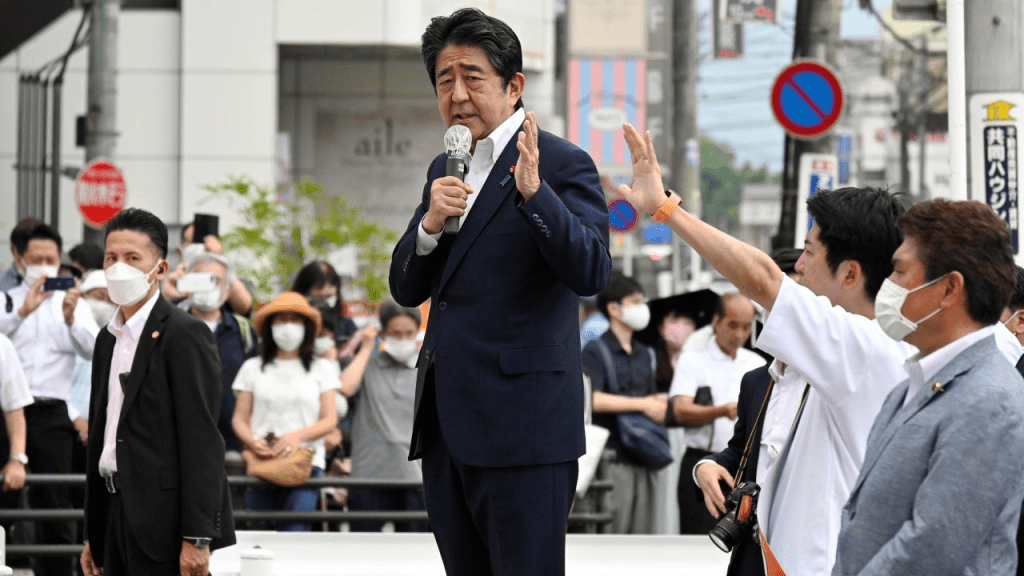
Abe was gunned down while speaking at a street-side campaign event in the western city of Nara—an act that stunned Japan, a country known for some of the world’s strictest gun control laws and exceptionally low rates of violent crime.
At the time of his death, Abe was no longer prime minister but remained one of Japan’s most influential lawmakers and a towering figure within the ruling Liberal Democratic Party (LDP). His assassination sent shockwaves through Japanese society and prompted immediate reviews of political security nationwide.
Motive Rooted in Grievance, Not Ideology
Yamagami told investigators and the court that he did not target Abe over political disagreements, but rather because of Abe’s perceived ties to the Unification Church, a controversial religious organization founded in South Korea.
Yamagami claimed his family suffered financial ruin after his mother made large donations to the church, fueling resentment that ultimately turned deadly. The court found these grievances did not mitigate the severity of the crime.
From a center-right perspective, the verdict reinforces a core principle of rule of law: personal grievance—however intense—cannot justify political violence. Japan’s judiciary made clear that accountability, not emotional narrative, governs justice.
Political Fallout and Institutional Scrutiny
While the criminal case is now resolved, its political aftershocks continue. The trial and subsequent investigations exposed decades of informal relationships between members of Japan’s ruling party and the Unification Church, including attendance at affiliated events and indirect support networks.
These revelations forced the LDP to conduct internal reviews and fueled public debate about transparency, influence, and the appropriate boundaries between religious organizations and political power. For a system that prizes stability and consensus, the episode was deeply unsettling.
Security Lessons Without Overreaction
Japan has since increased security around political events, but leaders have largely resisted calls for sweeping surveillance or emergency-style restrictions. That restraint matters.
Rather than using the tragedy to justify expansive state power, Japan’s response has emphasized targeted security improvements while preserving civil norms—an approach many center-right observers view as a model of proportional governance.
Justice Delivered, Questions Remain
The life sentence ensures Yamagami will never walk free, delivering closure in a legal sense. But the case leaves behind unresolved civic questions: how political institutions manage outside influence, how grievances fester unnoticed, and how democratic societies protect leaders without abandoning openness.
For Japan, a nation built on order and restraint, the lesson is not about fear—but about vigilance, accountability, and the quiet strength of institutions that hold even the most emotional cases to the rule of law.
 Republic Dispatch