By Republic Dispatch Staff
The Trump administration has moved to block advanced military training equipment from reaching China, reinforcing President Donald Trump’s hard-line approach to export enforcement and strategic competition with Beijing.
Earlier this month, the U.S. Department of Justice filed a civil forfeiture action targeting two anti-submarine warfare mission crew trainers that were seized while transiting from South Africa to the People’s Republic of China. Federal officials say the trainers incorporated U.S.-origin software and technical data and were intended for use by China’s military—placing the shipment squarely in violation of U.S. export control laws.
What Was Seized — and Why It Matters
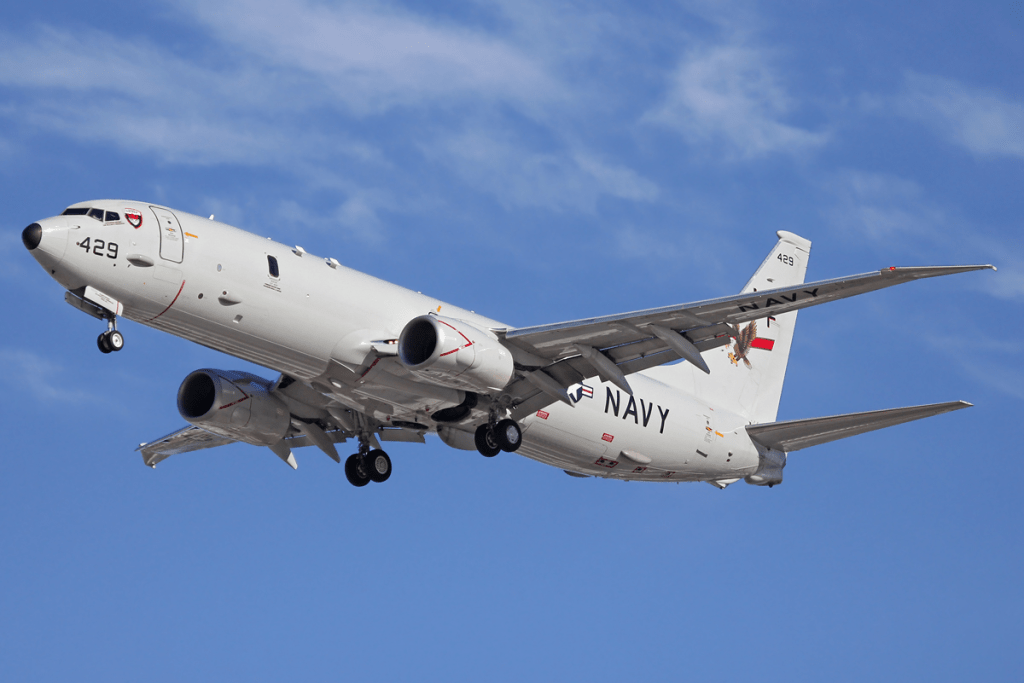
The seized systems were sophisticated “mission crew trainers,” mobile classroom-style simulators designed to replicate airborne maritime patrol and anti-submarine warfare operations. According to the Justice Department, the trainers were modeled on capabilities associated with the P-8 Poseidon, the U.S. Navy’s primary aircraft for tracking submarines and conducting maritime surveillance.
While the equipment was not a weapon, national security officials emphasize that training systems are force multipliers. They allow foreign militaries to rehearse complex operations, shorten learning curves, and develop tactics that can later be applied in real-world conflict. In a region as contested as the Indo-Pacific, that advantage matters.
A Case of Export Enforcement, Not Symbolism
The Trump administration has consistently argued that America’s strategic edge has been weakened by years of lax export enforcement and permissive technology transfers. This forfeiture action reflects a different posture: stopping sensitive transfers before they strengthen an adversary, even when those transfers are routed through third countries or private entities.
Federal prosecutors allege that the South Africa–based Test Flying Academy, which was linked to the trainers, operated under the appearance of a civilian flight-training organization while enabling military instruction for China. Under U.S. law, export controls apply to end use and end user—not just how a product is marketed.
Why Civil Forfeiture Was Used
Rather than pursuing a criminal indictment, the Justice Department used civil forfeiture, a tool that allows the government to seize property tied to violations of U.S. law without needing to secure custody of foreign defendants.
In national security cases involving overseas actors, forfeiture allows faster intervention and prevents sensitive equipment from reaching its destination. In this case, it ensured the trainers never made it to China—achieving the core objective of protecting U.S. military interests.
Pushback Abroad, Clarity at Home
Officials in South Africa and representatives tied to the academy have criticized the seizure as overreach, arguing the equipment was non-lethal and commercially produced. But U.S. officials counter that modern warfare is shaped as much by training, simulation, and doctrine as by hardware.
The Trump administration has repeatedly warned that China has benefited from decades of Western complacency, absorbing technology, expertise, and operational insight through indirect channels. This case illustrates how those transfers can occur quietly—and why enforcement matters.
A Broader Signal to Industry and Allies
Beyond the immediate seizure, the action sends a clear message to defense contractors, training firms, and foreign partners: U.S. export controls will be enforced, even outside traditional arms transfers.
For Thunder Report readers, the takeaway is straightforward. Strategic competition is not abstract. It plays out in supply chains, training programs, and regulatory enforcement. Blocking these trainers was not about provocation—it was about preventing an adversary from gaining insight into how American and allied forces operate at sea.
The Bottom Line
Under President Trump, export control enforcement has been treated as a frontline national security issue, not a paperwork exercise. The forfeiture of these anti-submarine warfare trainers reflects a governing philosophy that prioritizes deterrence, vigilance, and the protection of America’s military edge.
In an era of renewed great-power competition, the decision reinforces a simple principle: what the United States refuses to share can matter just as much as what it builds.
 Republic Dispatch