
By Republic Dispatch Staff
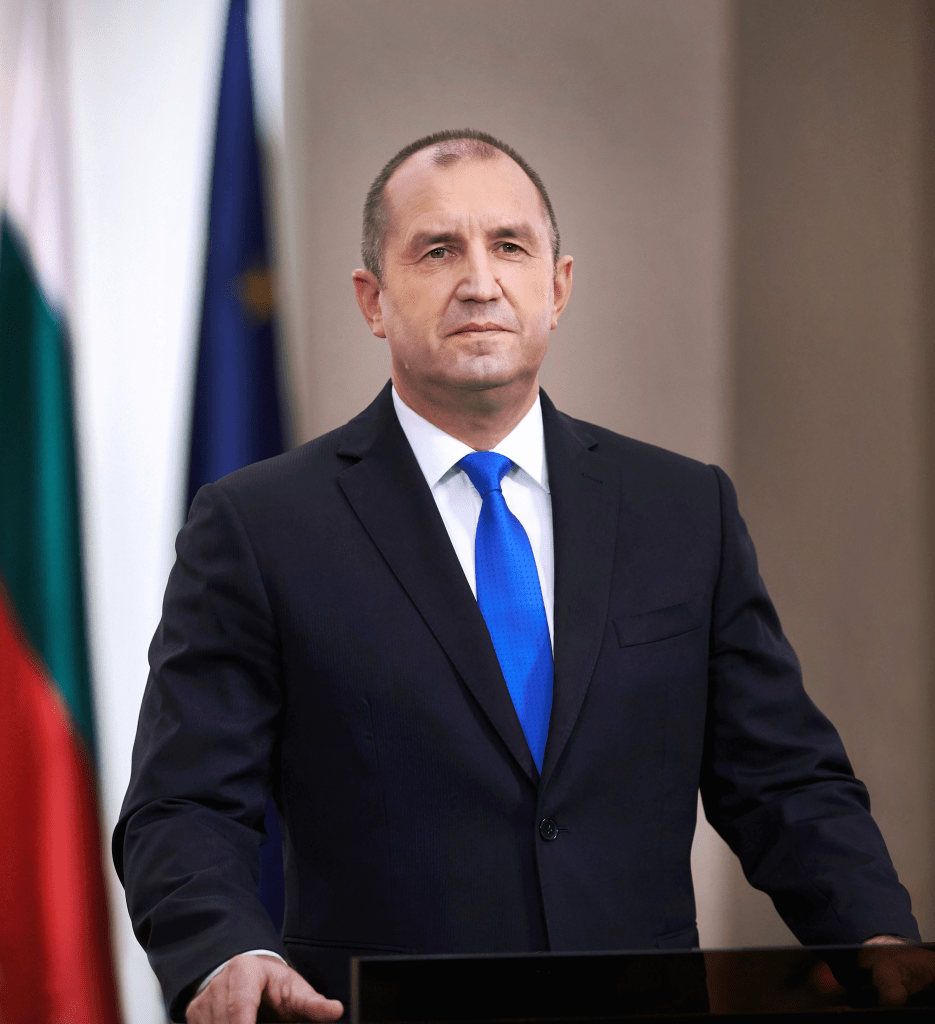
In yet another sign of political instability gripping Eastern Europe, Rumen Radev, Bulgaria’s president, formally resigned on January 19, 2026—setting the stage for fresh elections and renewed uncertainty in one of the European Union’s most politically volatile states.
Radev’s resignation, reported by Reuters, comes amid prolonged gridlock, weak coalition governments, and rising voter frustration after years of inconclusive elections and caretaker administrations. Bulgaria, a member of the EU and NATO, has struggled to maintain political continuity at a time when Europe faces mounting pressure from war, energy insecurity, and economic strain.
A Presidency Defined by Crisis Governance
Radev, a former air force commander, rose to prominence as an anti-establishment figure promising to challenge corruption and entrenched political elites. Over time, however, his presidency became increasingly defined by the very dysfunction he vowed to reform.
Repeated failures by Bulgaria’s parliament to form durable governing coalitions forced the president to appoint multiple caretaker governments—an extraordinary measure that gradually normalized executive stopgaps over democratic consensus. While constitutionally permissible, this pattern raised concerns about accountability, transparency, and the long-term health of parliamentary democracy.
From a center-right perspective, Bulgaria’s experience offers a cautionary tale: populist rhetoric combined with weak party discipline can hollow out institutions rather than strengthen them.
Why the Resignation Matters Beyond Bulgaria
Bulgaria occupies a strategic position on NATO’s southeastern flank and plays a key role in regional energy transit, Black Sea security, and EU border enforcement. Political instability in Sofia does not remain local—it ripples outward.
At a moment when Europe needs clarity and resolve, Bulgaria’s leadership vacuum underscores a broader regional problem: fragile democratic systems struggling to balance reform, sovereignty, and Western alignment.
Radev has often taken positions viewed as skeptical of deeper NATO engagement and cautious toward sanctions regimes—stances that placed him at odds with many Western partners. His departure may open the door to a leadership reset, but it could just as easily deepen polarization depending on what comes next.
What Happens Next
Under Bulgaria’s constitution, the resignation triggers a transitional phase that includes:
- Appointment of a caretaker government
- Scheduling of new elections
- Renewed coalition negotiations in a deeply divided parliament
The risk is not merely another election—but another inconclusive one. Bulgaria has already held multiple parliamentary elections in recent years, each failing to produce lasting governance.
Without structural reforms to party fragmentation, judicial independence, and corruption enforcement, changing faces alone may not change outcomes.
A Broader Lesson for Europe
Bulgaria’s political churn reflects a growing challenge across parts of Europe: voters demand reform, but fragmented systems deliver paralysis. When institutions fail to produce results, executive workarounds become tempting—and dangerous.
For center-right observers, the lesson is clear. Stability, rule of law, and institutional integrity matter as much as anti-corruption slogans. Democracies survive not on outrage, but on durable governing coalitions willing to make hard compromises.
Bulgaria now faces a choice: continue cycling through crises—or rebuild trust in the fundamentals of democratic governance.
 Republic Dispatch