By Michael Phillips | Republic Dispatch
Just days before Ugandans head to the polls, the government has pulled the digital plug.
On Tuesday, January 13, authorities in Uganda imposed a nationwide internet shutdown, blocking access to online services ahead of presidential and parliamentary elections scheduled for later this week. The move, ordered by the Uganda Communications Commission at the direction of the national security committee, has drawn sharp criticism at home and abroad—and underscores the uneasy balance between security, sovereignty, and democratic legitimacy in long-ruling regimes.
Officials defended the blackout as a preventive measure. Nyombi Thembo, head of the communications commission, said the shutdown was intended to stop the “weaponization of the internet,” curb misinformation, and prevent the spread of hate speech during a tense political moment. No timeline was given for when service would be restored.
But critics see a familiar pattern.
A Leader Seeking a Seventh Term
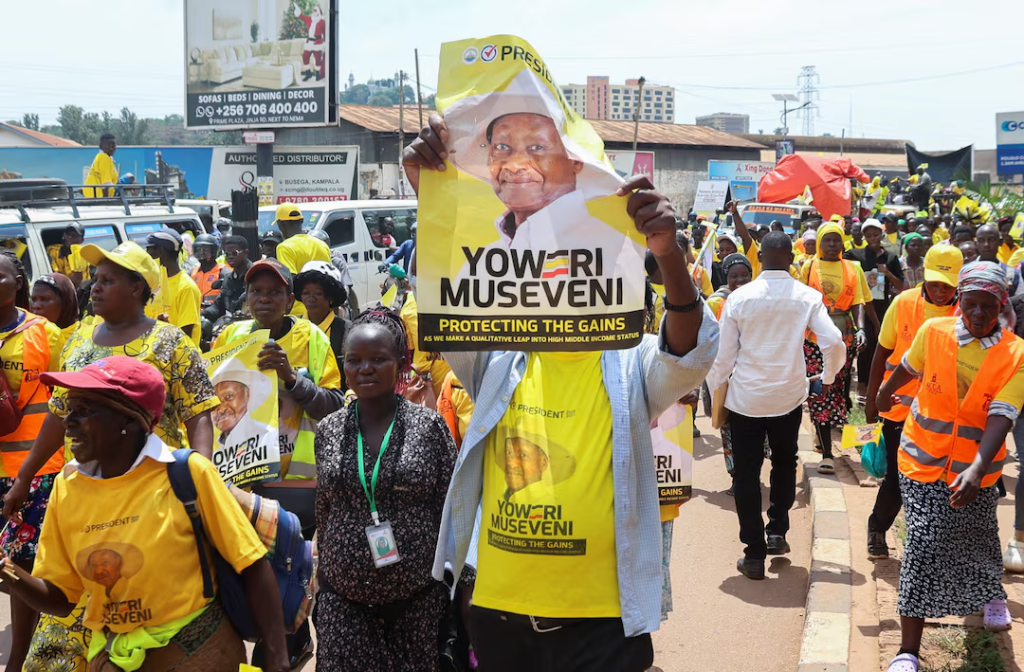
President Yoweri Museveni, who has ruled Uganda since 1986, is seeking a seventh term in office. At 80 years old, Museveni remains firmly in control of the state apparatus and is widely expected to win. Yet his long tenure has increasingly relied on restrictions—on opposition rallies, media, and now digital communication—to manage dissent.
Internet shutdowns are not new in Uganda. During the 2021 election, authorities blocked social media platforms and cut connectivity amid protests and allegations of vote rigging. The current blackout appears designed to preempt similar unrest, particularly if results are disputed.
From a center-right perspective, the issue is not whether governments have the authority to secure elections—they do—but whether blunt tools like nationwide shutdowns ultimately weaken the credibility they are meant to protect. Cutting off the internet days before a vote sends a signal of insecurity, not confidence.
Bobi Wine and a Youth-Driven Challenge
The primary challenger once again is Bobi Wine, born Robert Kyagulanyi Ssentamu, a former pop star turned opposition politician who has galvanized urban youth. Wine has framed his campaign as a protest against entrenched rule, corruption, and state violence, accusing authorities of abducting supporters and manipulating the electoral process.
Wine’s rise—from Kampala’s slums to the national stage—highlights how culture, celebrity, and social media have reshaped politics across Africa. That reality helps explain why regimes facing generational challenges increasingly target digital platforms. Social media allows opposition movements to organize rapidly, bypass traditional state-controlled outlets, and document abuses in real time.
For authoritarian-leaning governments, that transparency is a threat.
Security vs. Legitimacy
Supporters of the shutdown argue that fragile states have a responsibility to prevent violence, disinformation, and foreign interference. Those concerns are not frivolous. Online platforms have been used globally to inflame tensions and spread falsehoods.
But there is a cost. A blanket blackout punishes ordinary citizens, disrupts businesses, and undermines trust in the electoral process. It also deprives election observers, journalists, and civil society of tools needed to verify results and deter fraud.
Strong states do not fear scrutiny. They manage risk without silencing an entire population.
A Warning Beyond Uganda
Uganda’s decision is part of a broader trend across parts of Africa and the developing world, where governments increasingly resort to internet controls during elections. For Western democracies—and especially policymakers who champion free markets and free speech abroad—the lesson is clear: stability achieved through repression is temporary.
As Uganda votes, the real test will not just be who wins, but whether the result is seen as legitimate by a connected, youthful population that knows what it is being denied. Turning off the internet may quiet dissent for a weekend. It does little to resolve the deeper question of how long power can be sustained by pulling plugs instead of earning consent.
 Republic Dispatch