

By Michael Phillips | Republic Dispatch
The Trump administration is preparing to announce a new governance framework for the Gaza Strip as early as this week, according to reporting by the Financial Times. The plan marks Washington’s most ambitious attempt yet to shape a post-war “day after” scenario in Gaza following the fragile ceasefire that halted two years of fighting in October 2025.
At its core, the proposal aims to transition day-to-day civil administration away from Hamas toward a technocratic Palestinian structure, overseen and backstopped by the United States and Israel. Supporters describe it as pragmatic realism after years of diplomatic paralysis; critics warn it risks repeating past failures without sufficient security guarantees or funding.
A Technocratic Reset — On Paper
The reported blueprint centers on a 14-member Palestinian technocratic committee tasked with managing civilian affairs—health, infrastructure, border administration, and basic services. Oversight would be provided by an international “high representative,” widely expected to be Nickolay Mladenov, the former UN Middle East envoy.
U.S. officials involved in ceasefire implementation would form an executive layer above the committee, coordinating with Israeli authorities while attempting to build international buy-in. Early “confidence-building” steps reportedly include reopening the Rafah crossing to Egypt, expanding medical access, and easing import restrictions into Gaza.
From a center-right perspective, the technocratic approach reflects a hard-learned lesson: absent credible governance alternatives, militant groups fill the vacuum. The administration appears determined to avoid repeating the post-2005 Gaza withdrawal mistake, when Hamas consolidated power after Israel disengaged without a durable civil framework.
Kushner Returns to the Middle East Chessboard
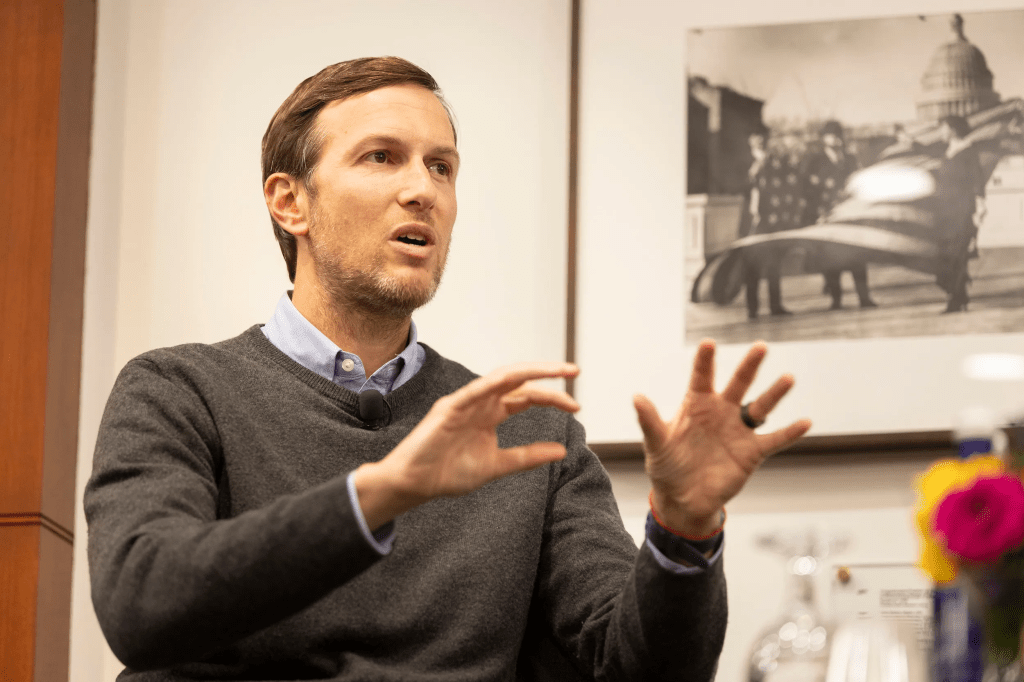
A familiar name is again central to the effort. Jared Kushner, President Trump’s son-in-law and architect of the Abraham Accords, is expected to play a significant informal role despite holding no official title.
Kushner’s defenders point to his track record—particularly the normalization agreements between Israel and several Arab states—as proof that unconventional diplomacy can succeed where traditional channels stall. The ceasefire itself, brokered with U.S. envoy Steve Witkoff, is cited by administration allies as evidence that personal relationships and deal-making can still move the needle in the Middle East.
Skeptics counter that Kushner’s private equity ties to Gulf investors create optics problems at a moment when transparency and accountability matter. The White House has dismissed those concerns, emphasizing results over process.
Funding Gaps and Security Realities
The most serious obstacle is money—and security. Only about $1 billion has reportedly been pledged so far, a fraction of the tens of billions needed to rebuild Gaza’s shattered infrastructure. Western governments and Muslim-majority states alike remain reluctant to commit peacekeeping troops or long-term funding without clear answers on Hamas disarmament.
Israel, for its part, continues to occupy roughly half of Gaza and has made clear that large-scale reconstruction or troop withdrawals will not proceed while Hamas remains armed. That unresolved tension underscores the plan’s central gamble: governance reform without first resolving the security question.
Big Vision, Thin Middle Ground
The initiative also revives talk of an ambitious long-term redevelopment vision—sometimes described as a decade-long effort to transform Gaza into a modern economic hub. Admirers see echoes of the “peace through prosperity” logic behind the Abraham Accords; critics argue the vision leaps too far ahead of on-the-ground realities.
As one regional analyst put it, there is still a missing bridge between ceasefire management and lasting stability.
A High-Risk, High-Reward Play
For President Donald Trump, the Gaza plan reflects a broader governing philosophy: bold, top-down initiatives driven by leverage, economics, and unconventional negotiators rather than slow-moving multilateral consensus. If it succeeds, it could reshape the post-war Middle East and reinforce the administration’s claim that deterrence plus deal-making beats endless conflict management.
If it fails, it risks becoming another well-intentioned plan undone by local realities, insufficient funding, and unresolved security threats.
Either way, Washington’s impending announcement signals that the United States is no longer content to manage Gaza’s crisis from the sidelines. The administration is betting that structure—even imperfect structure—is better than vacuum.
 Republic Dispatch