By Michael Phillips | Republic Dispatch
The internet wasn’t wrong about the math — but it may be wildly wrong about what just actually happened.
Following the dramatic U.S. military operation that captured Nicolás Maduro and his inner circle on January 3, President Donald Trump declared that the United States would temporarily “run” Venezuela during a transitional period — including effective control over the country’s oil industry.
The numbers immediately lit up social media:
- 303 billion barrels of proven crude oil reserves
- Oil trading around $57 per barrel
- A headline-grabbing $17.3 trillion in gross in-ground value
- Even at half price, $8.7 trillion
That figure alone exceeds the GDP of every country on Earth except the U.S. and China — roughly four times the size of Japan’s economy.
So yes — something big just happened. But no — the United States did not “gain $17 trillion overnight.”
The Reserves Are Real
There’s no disputing the core facts.
Venezuela does indeed hold the largest proven oil reserves on the planet, mostly concentrated in the Orinoco Belt. According to OPEC, the U.S. Energy Information Administration, and the Energy Institute, those reserves total about 303 billion barrels, or roughly 17–20% of global supply — more than Saudi Arabia.
At current prices, the raw arithmetic checks out.
But oil in the ground is not oil in the bank.
Why $17 Trillion Is Not a Payday
What’s being widely misunderstood is the difference between resource valuation and realizable economic value.
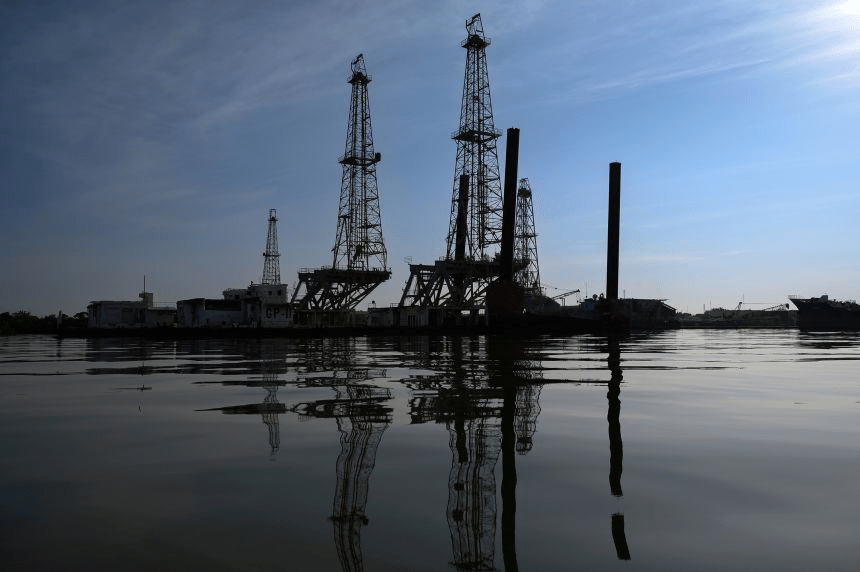
Venezuela’s oil sector is in shambles:
- Production has collapsed from 3.5 million barrels/day to around 1 million
- Infrastructure is decayed after decades of socialist mismanagement
- Much of the crude is heavy and sour, costly to extract and refine
- Rebuilding pipelines, refineries, and ports will cost tens to hundreds of billions
- Meaningful ramp-up would take years, not months
Independent estimates suggest that once costs, time, and political risk are factored in, Venezuela’s oil may be worth $1–2 trillion in net present value — still massive, but nowhere near the viral figures being thrown around.
Who Actually Controls the Oil?
Despite the rhetoric, this is not a nationalization in reverse — nor a free-for-all.
Trump has signaled that major U.S. firms would be invited to invest and operate, likely through concessions, joint ventures, or asset recovery agreements tied to past expropriations. Companies like Chevron, already operating under limited licenses, are expected to play a role — cautiously.
State oil company PDVSA remains operational but hollowed out. Any recovery depends on private capital, stability, and time.
What Happens to Oil Prices?
Short term? Probably not much.
Global markets are currently oversupplied, demand growth is soft, and Venezuelan output cannot surge overnight. Analysts expect only muted movement when oil futures reopen Sunday evening.
Longer term, however, a functioning Venezuelan oil sector could add millions of barrels per day back to global supply — putting downward pressure on prices, benefiting consumers but hurting OPEC producers.
The Political Earthquake Is the Real Story
International backlash has been swift and intense, with critics calling the move imperialistic and unlawful. Supporters argue that Maduro’s narco-state, decades of asset seizures, and mass migration crisis justified intervention.
But regardless of where one stands, this is undeniably historic.
The U.S. has not merely sanctioned or pressured Venezuela — it has forcibly ended a regime and declared stewardship over the world’s largest oil reserve base.
That alone changes global geopolitics.
Bottom Line
The viral claim that “the U.S. gained more wealth than the rest of the world combined” is mathematically cute — and economically misleading.
But dismissing this moment as hype is also a mistake.
This was not an oil trade.
It was not a sanctions tweak.
It was not business as usual.
It was a shock to energy markets, sovereignty norms, and the post-Cold War order — and the consequences will unfold not in hours, but over years.
Sunday’s market open is just the beginning.
 Republic Dispatch