By Michael Phillips | Republic Dispatch
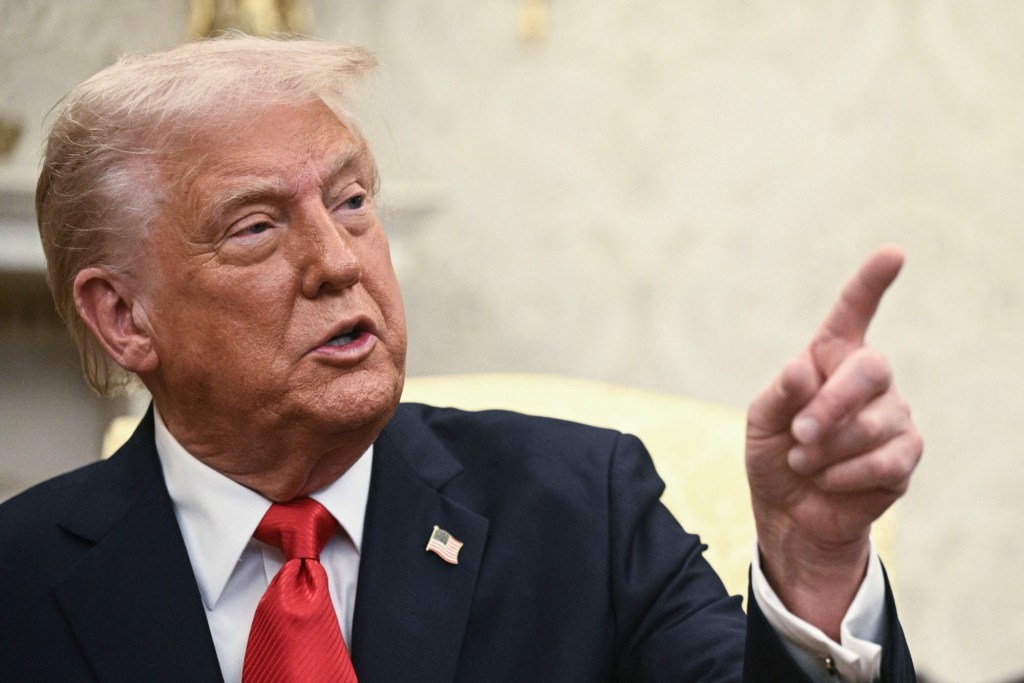
President Donald Trump set off predictable media alarms this week after warning that the United States is “locked and loaded” should Iranian authorities violently crush ongoing protests. But despite breathless headlines, the administration’s posture appears far more measured—and strategic—than critics suggest.
According to reporting by CNN and other outlets, Trump’s early-morning Truth Social post on January 2 was intended as a deterrent, not a declaration of war. U.S. officials emphasized there has been no change in troop levels, no new deployments, and no imminent military action underway. Instead, the message was calibrated to put Iran’s leadership on notice as unrest spreads across the country.
A Regime Under Economic and Political Strain
The protests themselves are real—and serious. Sparked in late December by Iran’s economic freefall, demonstrations have spread across multiple provinces. The Iranian rial has collapsed to historic lows, inflation is hovering near 50 percent, and basic goods are increasingly unaffordable for ordinary citizens. What began as economic anger has morphed into open political dissent, with chants targeting the regime and its priorities abroad.
This marks the most significant unrest since 2022 and comes at a vulnerable moment for Iran. The regime is still reeling from last year’s Israel–Iran confrontation, ongoing sanctions pressure, and growing internal dissatisfaction over funds spent on foreign proxies while Iranians struggle at home.
Deterrence, Not Deployment
Despite Tehran’s predictable saber-rattling—warning that U.S. forces could be targeted if Washington intervenes—there is little evidence the White House is seeking direct confrontation. Officials have pointed instead to non-kinetic tools: expanded internet access for protesters, targeted sanctions, cyber operations, and diplomatic pressure.
This approach aligns with Trump’s long-standing preference for maximum pressure without open-ended wars. His rhetoric is blunt, but his record—particularly in the Middle East—shows a reluctance to commit U.S. ground forces absent a clear, overwhelming threat to American interests.
A Divided Right, a Predictable Media Narrative
Reaction on the American right has been split. Foreign-policy hawks see Trump’s warning as moral clarity—a signal to an authoritarian regime that mass murder of civilians will carry consequences. Others, particularly the isolationist wing, worry any threat risks mission creep.
What’s missing from much of the mainstream coverage, however, is the extent to which Iranian protesters themselves are escalating beyond economic complaints. Reports from the ground indicate open anti-regime slogans, attacks on government buildings, and growing coordination among opposition groups—facts that complicate the narrative of “spontaneous” unrest and suggest a deeper legitimacy crisis.
The Strategic Reality
For now, the administration appears content to let Iran’s internal pressures build—while making clear that mass atrocities would cross a red line. That is not recklessness; it is classic deterrence.
Whether the protests lead to reform, repression, or something more dramatic remains uncertain. But the notion that a single Trump post has placed the U.S. on the brink of war says more about media reflexes than actual policy.
As of early January 2026, the reality is simple: no troop surge, no invasion plans, no war—just a warning issued to a regime already under strain.
Republic Dispatch will continue tracking developments as the situation evolves.
 Republic Dispatch