By Michael Phillips | Republic Dispatch
Israel’s government has announced it will revoke the operating licenses of 37 international non-governmental organizations (INGOs) working in Gaza and the West Bank, a move that has sparked sharp criticism abroad but is being defended in Jerusalem as a necessary step to prevent terrorist infiltration and restore accountability to humanitarian aid.
Under the decision, announced December 30 and taking effect January 1, 2026, affected organizations will have a 60-day wind-down period to cease operations. Israel says the groups failed to comply with new registration rules requiring full disclosure of staff identities and adherence to baseline political and legal criteria.
What Israel Is Saying
Israel’s Ministry of Diaspora Affairs and Combating Antisemitism, led by Amichai Chikli, framed the decision as a security safeguard, not an aid blockade. Officials argue that humanitarian frameworks have been exploited by Hamas and allied networks, making stricter vetting unavoidable after the October 7, 2023 attacks and the subsequent war.
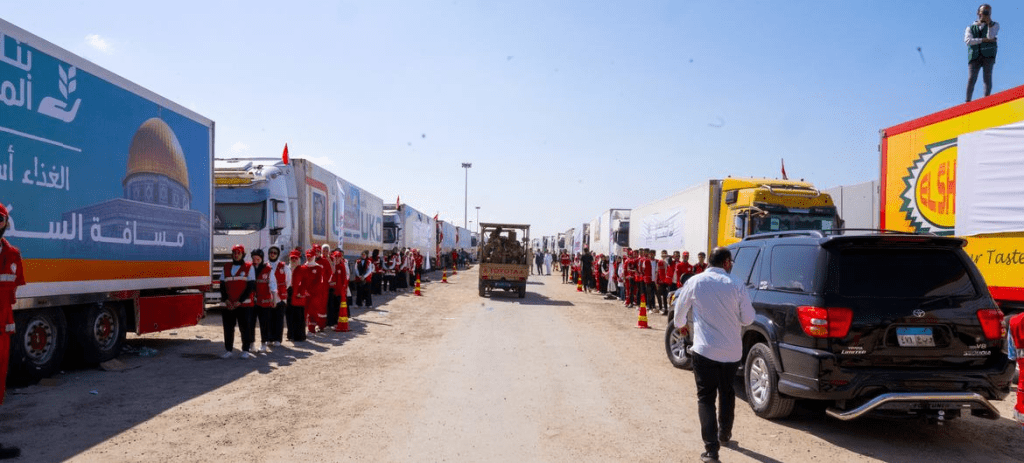
According to Israel’s military coordination body COGAT, the 37 groups collectively accounted for less than one percent of total aid historically and delivered no aid during the most recent ceasefire. Israel says humanitarian assistance will continue through UN agencies, bilateral partners, and more than 20 NGOs that complied with the new rules.
The registration framework also allows authorities to deny licenses to groups that deny Israel’s existence as a Jewish and democratic state, deny the Holocaust or Hamas’s October 7 attacks, support armed struggle, promote boycotts, or back international prosecutions of Israeli forces.
From a center-right perspective, Israel’s position is straightforward: sovereign states at war retain the right—and obligation—to know who is operating in conflict zones under humanitarian cover.
International Pushback
The move has drawn condemnation from a coalition of ten countries, including the UK, France, Canada, Japan, and several Nordic states, which issued a joint statement calling the rules “restrictive” and “unacceptable.” They warned that Gaza’s humanitarian situation remains catastrophic and that aid restrictions could worsen conditions, particularly in healthcare.
UN-aligned humanitarian bodies described the criteria as “vague” and “politicised,” arguing that remaining organizations lack the capacity to fill potential gaps. Several prominent aid groups—among them Doctors Without Borders, the International Rescue Committee, CARE International, and the Norwegian Refugee Council—have denied wrongdoing and warned of service disruptions.
Critics argue that requiring full staff disclosure could endanger aid workers. Israel counters that transparency is standard practice in other counterterrorism theaters and that refusing basic vetting raises legitimate red flags.
A Familiar Debate Over Aid and Security
The dispute reflects a broader, long-running tension: how to deliver humanitarian aid in territory controlled—or heavily influenced—by terrorist organizations without enabling them. Israel points to past cases of Hamas diverting aid, taxing supplies, or embedding operatives within civilian institutions, including schools and hospitals.
From a center-right vantage point, the question is not whether aid should flow into Gaza, but whether it can do so responsibly. Israel maintains that aid is continuing, simply rerouted through actors willing to meet security and transparency standards.
Notably, the United States has not joined the public condemnation. That silence aligns with Washington’s broader posture under President Trump’s second term, which has emphasized Israeli security concerns and tighter oversight of humanitarian channels.
What Happens Next
The revocations will fully take effect by March 2026 unless appeals succeed or the policy is modified. In the meantime, Gaza’s humanitarian system will be tested—not only by Israel’s enforcement, but by whether remaining aid channels can scale up as promised.
The episode underscores a reality often lost in international coverage: humanitarian access in Gaza is no longer just a relief issue, but a counterterrorism and governance challenge. Israel’s decision may be controversial, but it reflects a post-October 7 calculation shared by many center-right policymakers—that aid without accountability can become a weapon in the hands of those it is meant to restrain.
 Republic Dispatch