
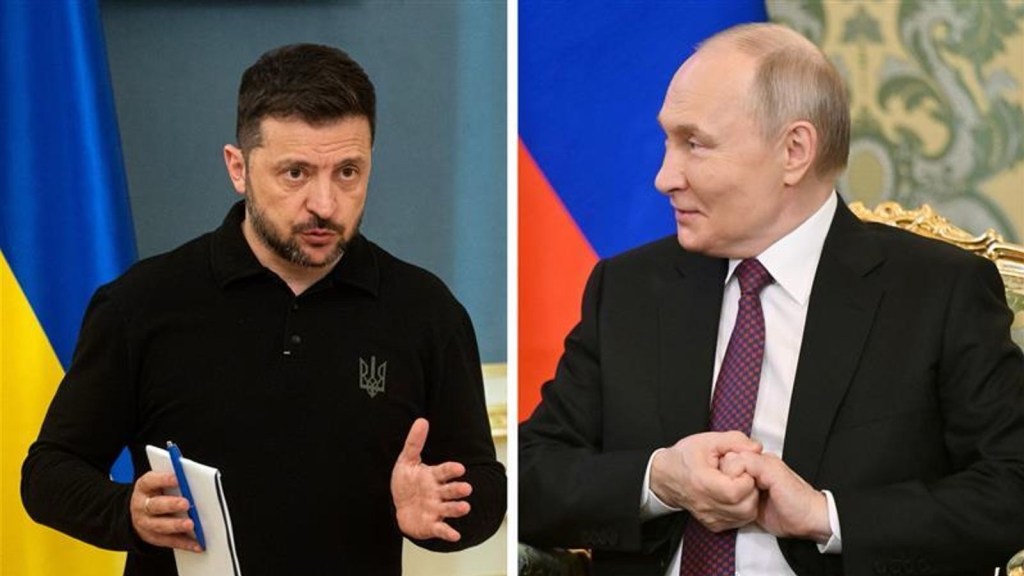
By Michael Phillips | Republic Dispatch
Diplomatic efforts to end the nearly four-year war between Russia and Ukraine have intensified in recent weeks, but despite unprecedented U.S. engagement and a newly revised peace framework, the odds of a near-term agreement remain low.
A 20-point peace plan jointly developed by U.S. and Ukrainian officials—presented publicly by Ukrainian President Volodymyr Zelensky on December 23—represents the most detailed attempt yet to chart a path toward a ceasefire. The plan emerged after months of shuttle diplomacy under President Donald Trump, whose administration has made ending the conflict a top foreign-policy priority.
Yet early signals from Moscow suggest the proposal is unlikely to meet the Kremlin’s core demands.
What the Current Plan Offers
The revised framework is notably more favorable to Kyiv than earlier drafts floated in November, which were widely criticized for echoing Russian positions. Key elements of the current proposal include:
- An immediate ceasefire with a freeze along existing front lines.
- Robust security guarantees for Ukraine, backed by the U.S. and European partners, short of formal NATO membership.
- Russian withdrawals from several non-Donbas regions, including parts of Kharkiv and Sumy.
- Conditional demilitarized zones in remaining Ukrainian-held parts of Donetsk, requiring reciprocal pullbacks from both sides.
- No formal Ukrainian renunciation of NATO aspirations, paired instead with accelerated European Union integration.
- A massive reconstruction and investment package, estimated at more than $200 billion.
From a center-right, realist perspective, the plan reflects a clear U.S. shift away from open-ended military support toward structured conflict resolution—prioritizing stability, deterrence, and burden-sharing with Europe.
Why Moscow Is Likely to Say No
Despite the plan’s concessions, Russia’s strategic calculus has not changed.
President Vladimir Putin has repeatedly insisted on two non-negotiables: full control of the Donetsk and Luhansk regions and permanent Ukrainian neutrality. The current proposal offers neither. Instead, it asks Russia to relinquish territory it still hopes to capture militarily.
From Moscow’s vantage point, time is not working against the Kremlin. Russian forces continue to make slow but steady gains in eastern Ukraine, and the Russian military has sustained its manpower through large-scale contract recruitment. While sanctions have constrained Russia’s economy, they have not produced the kind of crisis that would force immediate compromise.
Russian officials have signaled that they are “reviewing” the proposal, but analysts close to the Kremlin describe it as a nonstarter—useful for delaying additional sanctions or managing U.S. relations, but not a basis for peace.
The Trump Factor
President Trump has cast himself as the deal’s ultimate guarantor, proposing a U.S.-led “Peace Council” to oversee implementation and enforce compliance. Supporters argue this hands-on approach injects urgency and accountability that prior diplomatic efforts lacked.
Critics, including some on the right, caution that any agreement perceived as freezing Russian territorial gains could reward aggression. Others counter that the alternative—years of attritional warfare with no realistic path to total Ukrainian victory—poses greater risks to U.S. interests, European stability, and global deterrence.
What is clear is that Trump’s strategy marks a decisive break from the Biden-era model of indefinite aid without defined end goals.
The Likely Outcome
Most analysts now expect prolonged negotiations rather than a breakthrough. A limited ceasefire or interim framework sometime in 2026 appears more plausible than a comprehensive peace deal in the coming months.
For now, diplomacy serves tactical purposes on all sides: Ukraine seeks stronger guarantees and continued Western backing; Russia aims to preserve leverage while pressing its battlefield advantage; and Washington wants to cap U.S. exposure while preventing a wider war.
The talks are real. The momentum is real. But so are the obstacles.
Until Russia’s core demands shift—or battlefield realities change—the war is more likely to be managed than ended.
 Republic Dispatch