
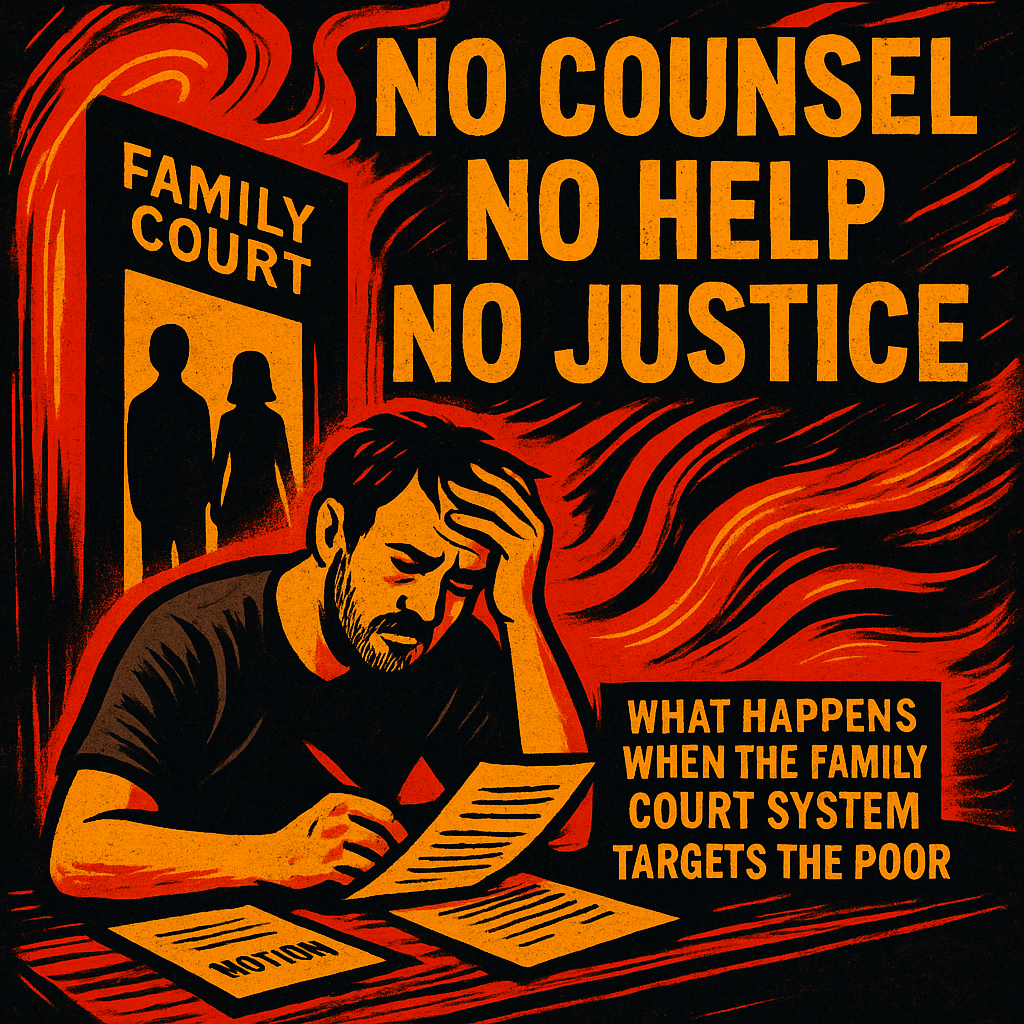
“They’ve built a system where you can’t win unless you have money or connections. If you’re poor, they’ll take your kid, your rights, and then charge you for it.” — William H. Sewell
Introduction: When Poverty Becomes a Legal Disability
What happens when a father can’t afford a $25,000 Guardian ad Litem (GAL) fee? What happens when that same father is denied legal aid, ignored by the state attorney general, and left to navigate the family court system alone—while facing jail time?
You get William Sewell.
This part of the series explores the systemic roadblocks that trap poor parents like William in a cycle of punishment, silencing, and judicial indifference. It’s not just about injustice—it’s about who the system was built to serve.
The Legal Labyrinth: Three Attorneys, No Advocacy
William was represented—on paper—by three attorneys. In practice, each failed him.
- Kate Schmutz, hired with $5,000 from William’s stepfather, never filed key motions and allegedly misrepresented his case in early hearings.
- Jonathan Lewis, paid $7,500 by William’s stepmother, allegedly left behind a box of disorganized documents and no strategy. His performance, William says, bordered on negligent.
- William Clifford, a retired Navy JAG officer with decades of experience, accepted nearly $11,000 but never conducted proper discovery or cross-examination. He claimed the case was too complex to prepare for, despite months of lead time. He still has this alleged box of disorganized documents he is holding hostage from William.
“Clifford told me he’d go through the banker’s box of files. But he never did. And when we got to court, he was winging it.”
Each attorney was paid. None of them helped. All of them left William closer to losing his child.
The Clerk, the Court, and the Culture of Silence
William turned to the Clerk of Court for help understanding how to file motions and navigate his pro se status. He says he was met with confusion at best—and obstruction at worst.
“I asked them how to submit a request for a continuance. They said they couldn’t help me. I asked for a form. They said it didn’t exist.”
This lack of transparency is no accident. It reflects a deeper reality: South Carolina’s family court system was not built for people like William.
Retaliation and the Attorney General’s Office
Hoping for intervention, William emailed the South Carolina Attorney General, detailing his concerns about misconduct by the GAL and his ex-wife’s attorneys. Rather than investigate, the AG’s office allegedly forwarded William’s complaint to the opposing counsel.
“They didn’t help. They ratted me out.”
Afterward, William says the retaliation increased. He was warned not to contact agencies. Motions he filed were ignored. His witnesses backed out. It felt like he was making things worse by trying to fight back and assert his rights.
The Process Server and the Breaking Point
One of the clearest signs of systemic failure came when a process server entered William’s home without permission, left paperwork on the floor, and later filed proof of service.
“I wasn’t home. No one was. That’s breaking and entering.”
This single act enabled a chain of hearings and custody rulings that should never have occurred. Yet the court accepted the fraudulent service—and punished William for someone breaking into his home.
A Justice System for Sale
This isn’t just William’s story. It’s the experience of thousands of poor and working-class parents who:
- Can’t afford private attorneys
- Are denied legal aid for family court cases
- Are punished for asserting their rights
- Are labeled “uncooperative” for filing pro se motions
South Carolina—and much of the country—treats custody as a civil matter but with criminal-like consequences, such as jail for contempt or child removal without due process.
And if you’re poor? The system can charge you thousands for the privilege of losing your child.
What Needs to Change
- Mandate legal counsel for indigent parents facing custody loss or contempt threats
- Reform GAL payment structures to prevent extortion and unlimited billing
- Ensure court staff assist pro se litigants with basic procedural rights
- Punish improper service and document fraud with the same vigor as missed deadlines
- Hold state AGs accountable when they enable retaliation instead of oversight
Final Words
“They told me justice was blind. But she sees money just fine. If I had cash, I’d have my kid. That’s the truth.” — William H. Sewell
This is Part 6 in our ongoing series, “Court of Ruin: The William Sewell Files.”
Michael Phillips is a writer, father, and advocate for family court reform. He is the founder of the REBUILT Justice Project and editor-in-chief of The Republic Dispatch and Father & Co.
All claims in this article are based on the personal experiences and allegations made by William H. Sewell. This article includes opinions and reporting based on interviews, court documents, and publicly available information. Donnie Gamache and any other named parties are presumed innocent of any wrongdoing unless proven otherwise.
 Republic Dispatch