By Michael Phillips
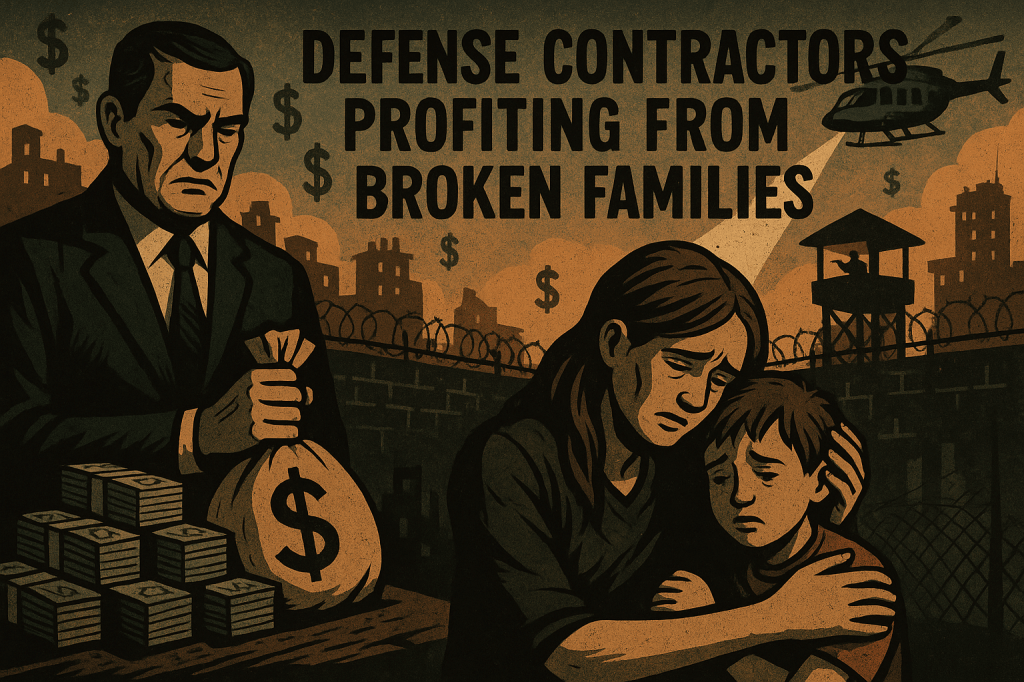
When most people think about Lockheed Martin, they picture fighter jets, missiles, or Pentagon contracts—not child support. But thanks to decades of public-private partnerships, defense contractors and corporate giants now play a central role in one of the most controversial and dysfunctional systems in America: child support enforcement.
Bruce Eden recently highlighted this disturbing truth in response to my article on the financialization of family court, noting that Lockheed Martin—through its former subsidiary IMS and now Conduent—has been involved in child support collection and disbursement for over 30 years. That’s not a typo: a company best known for building weapons of war was contracted to manage the financial lifelines of America’s most vulnerable families.
This isn’t just a bizarre twist of privatization. It’s a systemic transformation with devastating human consequences.
The Rise of the Child Support Industry
In the late 1990s, the federal government mandated that states establish automated State Disbursement Units (SDUs) to handle child support payments. Rather than keep these functions in-house, many states turned to corporate contractors. Lockheed Martin IMS stepped in, offering states like Pennsylvania, Maryland, and New York high-tech systems to process payments efficiently and at scale.
Efficiency, however, came at a price.
What began as a supposedly neutral administrative system has morphed into a sprawling child support industrial complex. Conduent (formerly Lockheed Martin IMS), MAXIMUS, Deloitte, CGI, KPMG, and a host of other private vendors now control everything from the collection and disbursement of payments to the algorithms used to determine arrears and enforcement triggers.
But these companies aren’t neutral. They’re not family law experts. They’re not trauma-informed. They don’t care whether the “obligor” is a loving parent struggling to pay or a person wrongly accused. They care about metrics, compliance, and cash flow.
Follow the Money, Lose the Humanity
This transformation has turned children into billing units and parents into financial targets. Court orders are fed into systems that prioritize automation and enforcement over context or equity. Non-custodial parents—many of whom are poor, disabled, or marginalized—are reduced to account numbers in a profit-driven process where success is measured in dollars collected, not families stabilized.
Parents who lose jobs, face health crises, or get caught up in custody disputes can be criminalized and penalized without regard for their circumstances. Systems designed by Lockheed Martin and now run by Conduent or other contractors don’t read case histories or evaluate mental health records. They flag nonpayment, trigger wage garnishments, revoke driver’s licenses, and sometimes even recommend jail time—all through automated processes.
This is where the corporate model of efficiency becomes dangerous. Family law demands nuance. It requires discretion. But when billion-dollar corporations are running the backend, those human elements get wiped away.
No Oversight, No Recourse
One of the most infuriating aspects of this arrangement is the lack of transparency. These contractors operate with limited public oversight and enjoy layers of immunity through their government partnerships. When errors happen—and they do—there’s no clear path to correction. Parents are bounced between state agencies and corporate call centers, often without ever speaking to a person who understands their case.
Worse, courts often treat these automated systems as gospel. Judges defer to SDU printouts and system logs rather than actual facts or evidence, reinforcing the illusion of neutrality. In reality, families are being ruled by a private, outsourced bureaucracy masquerading as justice.
Profiting from Family Breakdown
Let’s not forget the bigger picture: this isn’t just about inefficiency—it’s about profit. These companies make money from long-term contracts, processing fees, system upgrades, and compliance “solutions.” They thrive when systems remain complex, punitive, and opaque. They have zero incentive to simplify, reform, or humanize the process.
The revolving door between government agencies and corporate partners ensures that the same entities responsible for enforcing policy are also shaping it. And families—especially fathers, veterans, disabled parents, and working-class individuals—are left to navigate a maze designed to keep them paying, not parenting.
It’s Time to Audit the System
If we want real family court reform, we can’t just focus on judges, laws, or policies. We need to interrogate the entire infrastructure—the business model behind the enforcement. That means demanding:
- A public audit of all corporate child support contracts
- Full transparency of algorithms, policies, and decision-making systems
- An end to the criminalization of poverty through automated enforcement
- Reinstating human oversight and restoring due process in all enforcement actions
- Federal legislation preventing private contractors from profiting off child support enforcement
Conclusion: The Fight Ahead
The idea that defense contractors are quietly managing the lives of divorced and separated families should terrify every American. It’s not just dystopian—it’s happening right now, and it’s ruining lives.
Child support enforcement should be about ensuring that children receive the resources they need—not about extracting revenue from broken families through outsourced tyranny. Until we confront the privatization of justice, our family courts will remain a battlefield where profit wins, and parents lose.
We don’t need better software. We need a system that puts people first.
Michael Phillips is an independent journalist, father, and advocate for family court reform. He is the founder of REBUILT and editor of The Republic Dispatch and Father & Co. Follow his ongoing coverage at RepublicDispatch.com.
 Republic Dispatch