
By Michael Phillips
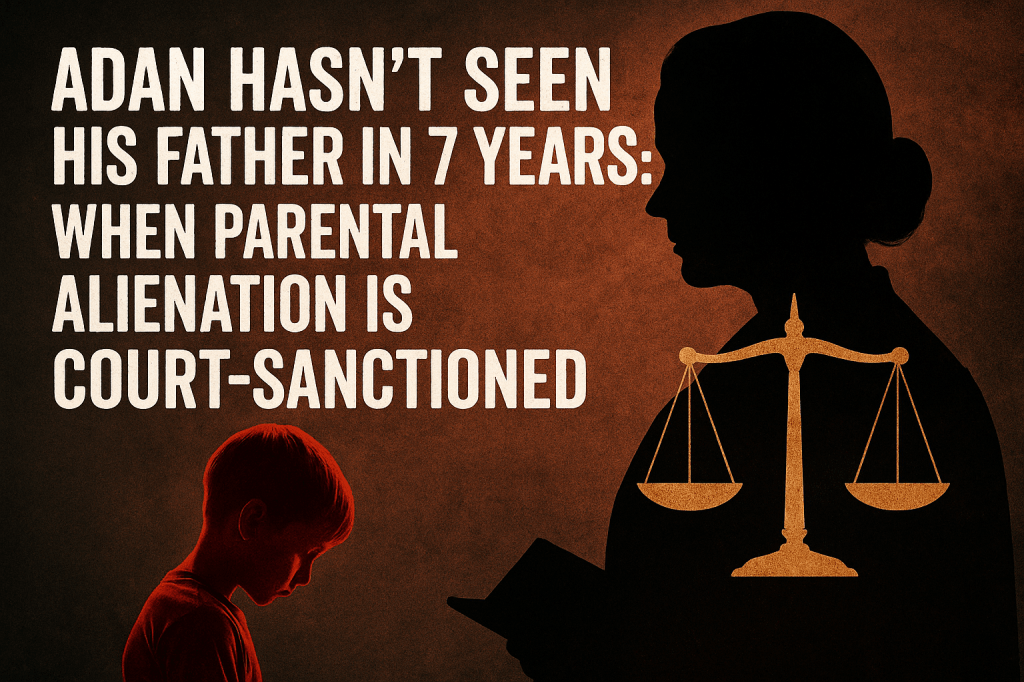
There is no allegation of abuse. No pending charges. No restraining order. No finding of danger. And yet, Marc Fishman has not seen his son Aidan in over seven years. Marc has three other children he has been unable to see for almost as long.
This is not a story about a deadbeat dad. It’s not a story about an absentee parent shirking responsibility. It’s a story about a father who has spent nearly a decade fighting for the basic right to parent—and a court system that has refused to let him.
At the heart of this tragedy is a disturbing truth: parental alienation doesn’t just happen between two people. In New York’s family court, it is often sanctioned, cemented, and enforced by the court itself.
No Visitation, No Explanation
In most custody disputes, even high-conflict ones, courts work to ensure some form of ongoing contact with both parents. But in Fishman’s case, visitation has been suspended without any evidentiary hearing proving unfitness or danger. A prior order for supervised visitation was ignored or undermined. Promises of review were delayed or denied.
The result? Aidan, now a teenager, has gone through most of his childhood without any meaningful contact with his father.
The Alienation Is Documented. The Court Doesn’t Care.
Supervised visitation supervisors have testified to the alienation. Federal filings, affidavits, and transcripts document a clear pattern of obstruction by the opposing party. Yet none of it has moved the court to act.
Instead, Fishman’s attempts to raise the issue have been met with deflections. Judges claim he’s re-litigating past issues. Clerks reject his filings on technicalities. Assigned counsel is denied. And visitation remains suspended—without review.
A Silent Epidemic in Family Court
Fishman’s story is not unique. Across the country, courts are failing to address parental alienation. Instead of intervening, they punish the targeted parent. Instead of enforcing visitation, they blame the child’s refusal on the parent who’s been excluded.
The result is a growing number of children who lose access to a fit, loving parent not because of abuse—but because of judicial inaction.
Why Is No One Accountable?
In most areas of law, a seven-year deprivation of rights without due process would be a scandal. But in family court, it’s paperwork. No one intervenes. No one explains. The judges rotate. The excuses shift. But the result is the same: the father is kept out.
What Fishman is asking for is not unusual. He is asking for a hearing. A chance to present evidence. A court order that is actually enforced. A path to reunification that doesn’t depend on the whim of an ex or the mood of a magistrate.
Time Is the Most Dangerous Weapon
Every year that passes is another year lost. The bond between a father and son can’t be paused and resumed at will. Memories fade. Resentments fester. And children grow up wondering why one parent wasn’t there—without ever being told the truth.
When courts fail to act, they are not neutral. They are complicit.
Conclusion: Reunification Is Not Radical
Marc Fishman should not have to beg for the right to see his child. No parent should. The presumption in family court must return to what it claims to honor: that children benefit from relationships with both parents.
Until that becomes more than lip service, family court will continue to destroy families under the guise of protecting them. And fathers like Marc Fishman will keep waiting—for justice, for their children, and for a system that remembers what it’s supposed to stand for.
Every day a child is alienated from a fit, loving parent is a day justice fails.
Help us shine a light on court-sanctioned parental alienation and fight for reform.
👉 Donate Now — Your support fuels investigative journalism that gives families a voice.
 Republic Dispatch