
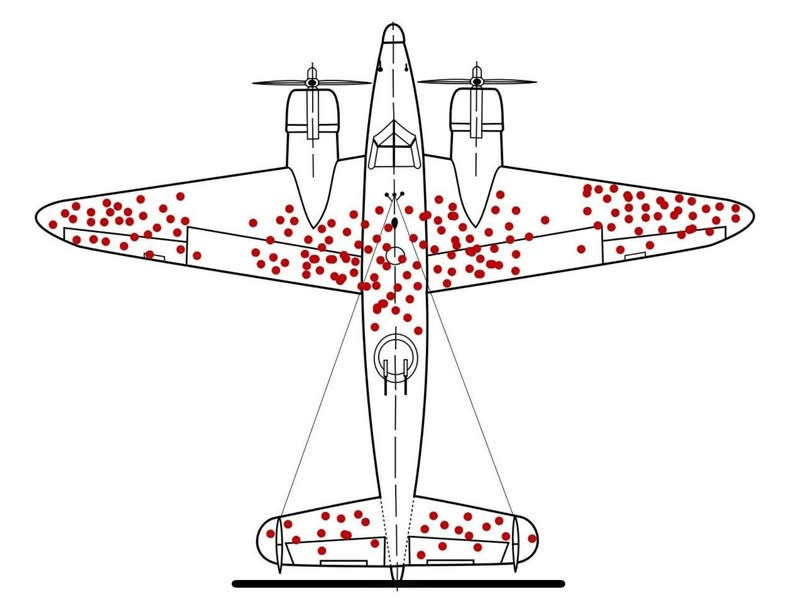
During World War II, the U.S. military examined bullet holes on returning fighter planes to determine where additional armor was needed. Most of the bullet holes appeared on the wings, tail, and fuselage. Initially, these were the areas they planned to reinforce.
But statistician Abraham Wald made a brilliant observation: they were analyzing the planes that made it home — not the ones that didn’t. The planes that returned had damage that was survivable. The ones that didn’t return? Likely hit in areas like the engine or cockpit — areas with little to no visible damage on the survivors. That missing data told the real story.
This is called survivorship bias, and it plagues more than war strategy and business analysis. It haunts the family court system — and we’re not just failing to see it. We’re burying the evidence.
Who Returns From Family Court?
In today’s media coverage, advocacy groups, and legal scholarship, we often focus on the parents who survive family court. The ones who manage to retain joint custody, who find a decent co-parenting rhythm, who rebuild relationships with their kids after a divorce.
But what about those who never “return”?
- The fathers who are erased from their children’s lives entirely.
- The disabled litigants denied accommodations and never even heard.
- The parents who are alienated, falsely accused, or forced into ADR traps without due process.
- The self-represented litigants who lose everything because they can’t afford legal protection in a system that’s not actually judicial.
- The mothers and fathers driven to despair, homelessness, or suicide after years of unfounded restraining orders, blocked visitation, and biased decisions.
We don’t count them. We don’t track them. We don’t listen to them. In the public mind, they simply didn’t make it back.
Where Are the Bullet Holes?
The system likes to look at the “returning planes”: the cases that settle, the joint custody arrangements that seem to function, the cooperative divorces, the smiling lawyers who call it a success.
But those are the lucky ones. They show where the system can survive damage.
What’s missing from that picture are the parts of the system that fail under pressure. And those are the spots that need reinforcement:
- Lack of accountability for false allegations
False claims of abuse or neglect are treated as strategy — not perjury. There is no recourse, no sanctions, and no investigation into the collateral damage. - Administrative courts masquerading as judicial tribunals
Family courts operate under “alternative dispute resolution” models, often outside the constitutional guardrails of due process, open trials, and judicial accountability. They’re not courts — they’re taxpayer-funded bureaucracies with gavel theater. - Exploitation of the disabled and vulnerable
Parents with ADHD, PTSD, autism, or trauma histories are routinely denied accommodations. Instead, their symptoms are weaponized against them to strip custody and credibility. - Bias against certain genders, classes, or appearances
Fathers are presumed abusers. Poor parents are presumed neglectful. Neurodivergent individuals are presumed unstable. These assumptions dictate outcomes — not evidence or law. - Pay-to-play legal systems
When parenting time becomes something you buy back through supervised visits, therapy mandates, or attorney compliance, it’s no longer justice. It’s extortion by policy.
The Invisible Dead: What We Don’t Track
Where is the national registry of children lost to alienation?
Where are the statistics on litigants who die by suicide during court cases?
Where are the audits of judges who ignore their own orders or deny every motion from one side while granting every request to the other?
They’re missing. Like the planes that didn’t return.
Because our entire system is built on a lie: that if someone didn’t make it back, they must have deserved it. That if you lost custody, you must be unfit. That if you’re angry, you must be abusive. That if you ask for rights, you must be trying to control your ex.
And the system keeps counting bullet holes on the survivors — while the rest of us bleed out unseen.
We Need Our Abraham Wald Moment
If we are ever going to fix family court, we need to turn our attention to the cockpit — to the cases that crashed. Not just the statistics of compliance, but the stories of collapse.
- Track dismissed protective orders.
- Audit cases with more than 50 denied motions.
- Investigate patterns of judicial denial and reversal.
- Interview the parents who disappeared, not just the ones still fighting.
- Build protections into the parts of the system where silence reigns — because that’s where the true damage occurs.
Until then, we’re just bolting armor onto wings while letting the engine explode.
Family court is not a war we’re winning. It’s a system running on survivor stories while ignoring the trauma trails behind it.
Let’s stop measuring success by who walks away.
Let’s start learning from who never returned.
Help Us Fight Back Against Broken Family Courts
Your support helps expose injustice, empower erased parents, and create tools for real change.
Shop our templates and workbooks on Gumroad — from custody motion templates to family court survival guides.
Donate to fuel our mission and keep these resources accessible for parents who need them most.
Every purchase helps fund investigations, legal advocacy, and reform efforts.
Don’t just survive family court — fight to change it.
 Republic Dispatch