
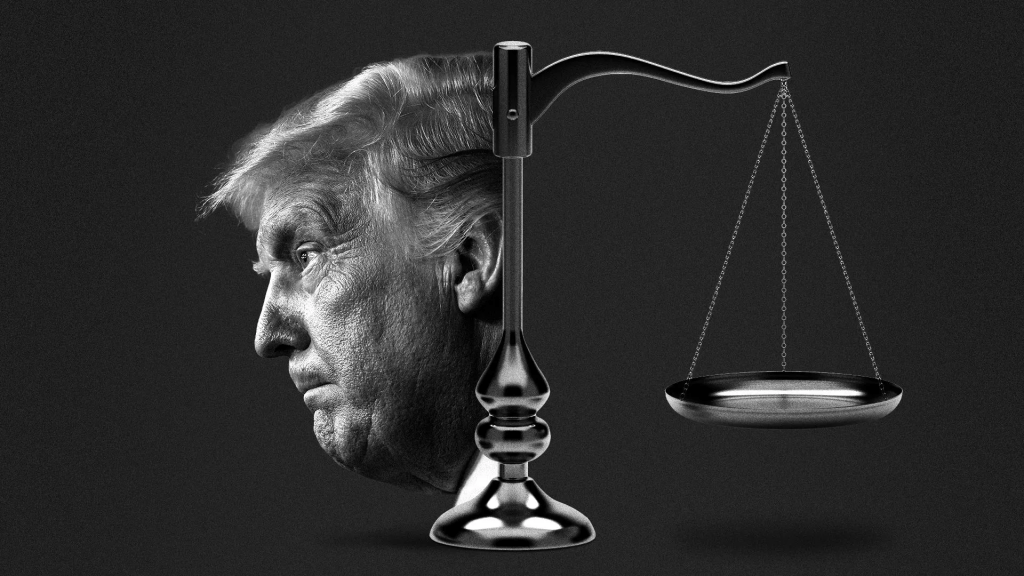
On May 16, 2025, the U.S. Supreme Court issued a 7-2 decision blocking the deportation of Venezuelan nationals alleged to have gang ties. At first glance, this ruling appears to contradict the hardline immigration stance of President Donald Trump, who promptly took to social media to criticize the Court’s decision. But don’t be fooled—Trump’s bark was louder than his bite. This ruling is, in fact, a massive victory for Trump’s long-term legal agenda.
This wasn’t about immigration. This was about power—specifically, administrative power. And the Supreme Court just delivered a major blow to the unchecked discretionary authority long wielded by federal agencies.
What Happened?
The case concerned whether the federal government could deport individuals under broad discretionary authority without providing a meaningful due process hearing. The plaintiffs were Venezuelan nationals labeled as having gang affiliations—allegations that, in many cases, were flimsy at best.
The Supreme Court ruled that such discretionary deportations violated the Constitution’s Due Process Clause. In short, the government can no longer sidestep constitutional protections by invoking “administrative discretion.” Even immigrants accused of gang ties have the right to a fair hearing under the law.
The 7-2 ruling surprised many, especially given the makeup of the Court. But it sent a crystal-clear message: Administrative convenience is not a license to trample constitutional rights.
Why This Is a Win for Trump’s Legal Philosophy
To understand why this ruling aligns with Trump’s goals, you have to go beyond the noise.
Trump has long railed against the “deep state” and the administrative state—the vast network of unelected agency officials and administrative judges (ALJs) who effectively create and enforce rules outside of the traditional judicial process.
In 2020, Trump began laying the groundwork for what legal scholars have dubbed the “unitary executive” vision: a government in which constitutional authority, not bureaucratic discretion, reigns supreme.
The 2025 Supreme Court decision advances that goal by:
- Restricting the power of administrative agencies and judges to issue life-altering decisions without strict adherence to constitutional protections.
- Reasserting the supremacy of due process, even in politically controversial matters like immigration.
- Signaling that ALJs and agency decision-makers are not above the Constitution.
What Does This Mean Going Forward?
The implications of this ruling are profound—and go far beyond immigration:
- Administrative Law Judges (ALJs) must now follow constitutional standards. No more rubber-stamping of agency orders without due process.
- Discretionary enforcement policies—including in areas like child support, environmental regulations, and workplace rules—are now under constitutional scrutiny.
- Self-represented litigants in family court, tax disputes, and Social Security appeals may now have a new constitutional basis to challenge biased or arbitrary rulings by administrative bodies.
This ruling reaffirms that no one, not even an agency with Congressional backing, can violate the Constitution.
Trump’s Performance Is Just That—a Performance
Trump’s public reaction to the ruling—condemning the Court and calling the decision “dangerous”—is textbook political theater. The truth is, this ruling fits squarely within his goal of ending the administrative state’s stranglehold on individual liberties.
His 2025 executive order to “kneecap” regulatory agencies was no coincidence. It was the first domino. This Supreme Court ruling is the next.
And make no mistake—this legal doctrine will continue expanding.
The Bigger Picture: Restoration of De Jure Constitutional Power
The Court’s decision signals something bigger than immigration. It’s part of a larger legal and political reckoning—a restoration of constitutional, de jure power in place of bureaucratic, de facto control.
For decades, Americans have been judged, punished, fined, or even stripped of parental rights by unelected officials operating under “discretion.” That era is ending.
Whether you love or hate Trump, this outcome is objectively a win for due process, for the Constitution, and for any American who values checks on government power.
Final Thought: Don’t Let the Headlines Fool You
While corporate media frames this as a loss for Trump and a win for “immigrant rights,” the real story is far more complex. This wasn’t about left vs. right. This was about liberty vs. unchecked authority.
The Court ruled correctly—and courageously. The Constitution, not administrative convenience, is the supreme law of the land. Let’s not forget it.
 Republic Dispatch